
Carbon Monoxide Safety Checks for Orange County Homeowners – What to Know
By Orlando Martinez · September 21, 2026 · 5 min read
When a family in an Orange County suburb woke to a squealing alarm in the middle of the night, the culprit was a faulty furnace vent. The alarm’s high‑pitched beeping was the only warning before the house filled with colorless, odorless carbon monoxide. Situations like this are why a dedicated CO safety check isn’t a luxury—it’s a practical safeguard for any homeowner, buyer, or seller in the region.
At Marine One Property Inspections, lead inspector Orlando Martinez treats every CO inspection as a chance to protect lives. The service is especially relevant in Orange County, where the mix of older single‑family homes, pool houses, and high‑efficiency gas appliances can create hidden CO pathways if not properly maintained.
Why Carbon Monoxide Is a Hidden Threat in Orange County Homes
Local sources that matter
- Gas furnaces and water heaters – Many homes built before the 2000s still rely on natural‑gas heating systems that, if vented poorly, can leak CO into living spaces.
- Pool and spa heaters – The county’s warm climate encourages year‑round pool use; gas‑fired pool heaters are a common CO source when exhaust is blocked.
- Portable generators – During power outages from seasonal storms, residents often run generators in garages or near windows, creating a rapid CO buildup.
- Kitchen ranges and fireplaces – Improperly adjusted burners or cracked flues can let CO escape into the kitchen or adjacent rooms.
Why the risk feels invisible
Orange County’s mild climate means windows stay closed for much of the year, limiting natural ventilation. Coupled with tight‑energy‑efficiency retrofits, any CO that does escape can linger unnoticed. Because CO is odorless, colorless, and non‑irritating, a simple alarm or a professional inspection is the only reliable early‑warning system.
The health impact
Even low‑level exposure can cause headaches, dizziness, or nausea—symptoms that are easily mistaken for a flu. Higher concentrations can lead to loss of consciousness or death within minutes. The safest approach is to prevent CO from ever entering the home.
What a Professional CO Safety Check Looks Like
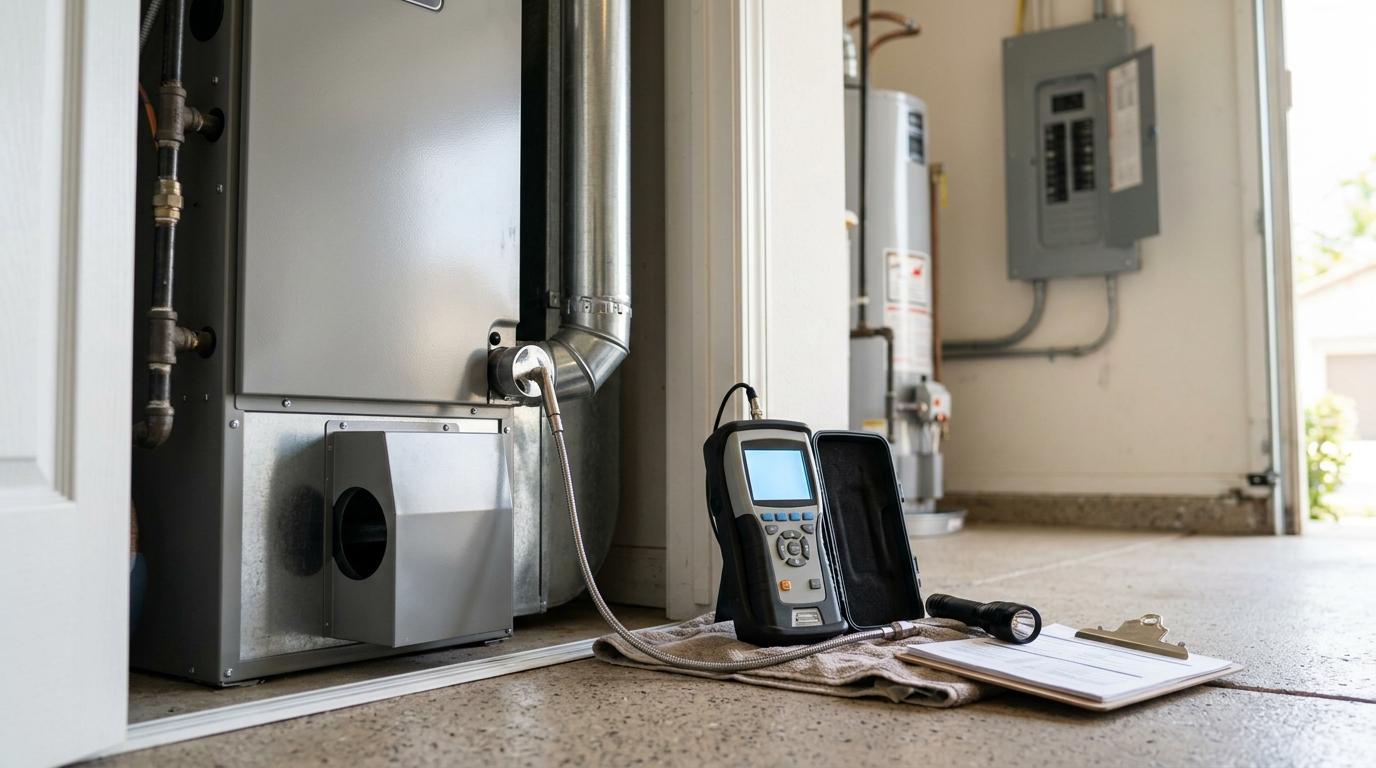
Orlando Martinez begins each CO safety assessment with a visual walk‑through of the home’s combustion equipment, then moves to instrumented testing. The process includes:
- Combustion appliance inspection – Checking furnace, boiler, water heater, and pool heater for proper venting, cracked heat exchangers, and secure connections.
- Exhaust pathway verification – Using a handheld CO detector, Orlando measures CO levels at the furnace vent termination, chimney flues, and near any gas‑powered appliances.
- Indoor air sampling – A calibrated CO monitor is placed in the living room for a short period to capture any background levels that may indicate hidden leaks.
- Ventilation assessment – Ensuring that fresh‑air intakes are unobstructed and that bathrooms, kitchens, and utility rooms have adequate makeup air.
- Drone roof inspection (when needed) – For homes with rooftop HVAC units or complex vent stacks, the FAA‑Part 107 licensed drone captures high‑resolution images of roof penetrations without climbing ladders.
- CrawlBot foundation scan – In homes with basement furnace rooms, the CrawlBot robot checks under concrete slabs for blocked vent terminations.
All findings are documented in a clear report, highlighting any immediate safety concerns and recommending next steps—whether that’s a simple vent cleaning or a professional repair.
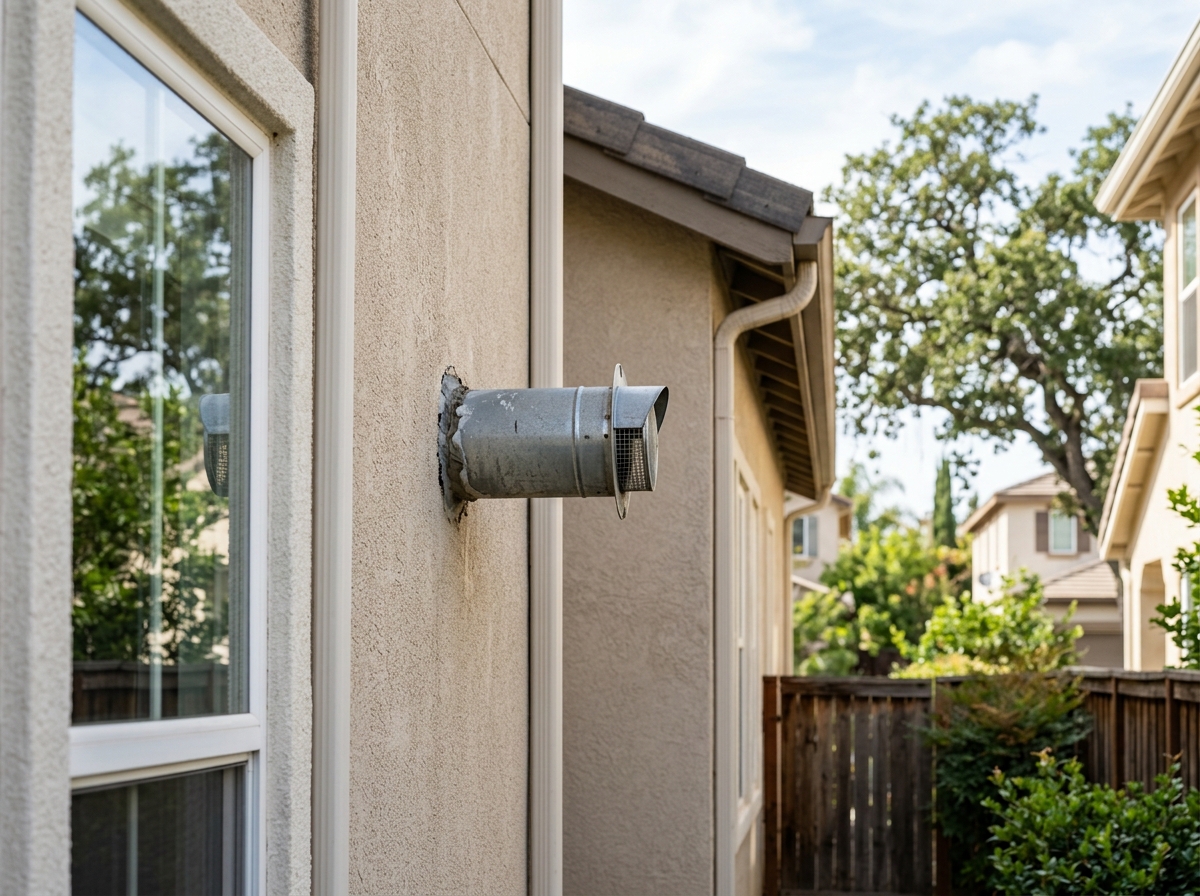
Image description: a close‑up view of a gas furnace vent pipe exiting through the side of a two‑story suburban home in Orange County, showing the vent termination and surrounding siding.
Common CO Risk Factors in the Region and How to Mitigate Them
- Blocked or cracked vent pipes – Keep exterior vent terminations clear of debris, leaves, or snow. Schedule a yearly visual check, especially after heavy rains.
- Improperly sized appliances – An oversized furnace can run inefficiently, producing excess CO. Verify that a licensed HVAC contractor has sized the unit correctly.
- Aging heat exchangers – Cracks develop over time. If your furnace is more than 15 years old, consider a professional heat‑exchanger inspection.
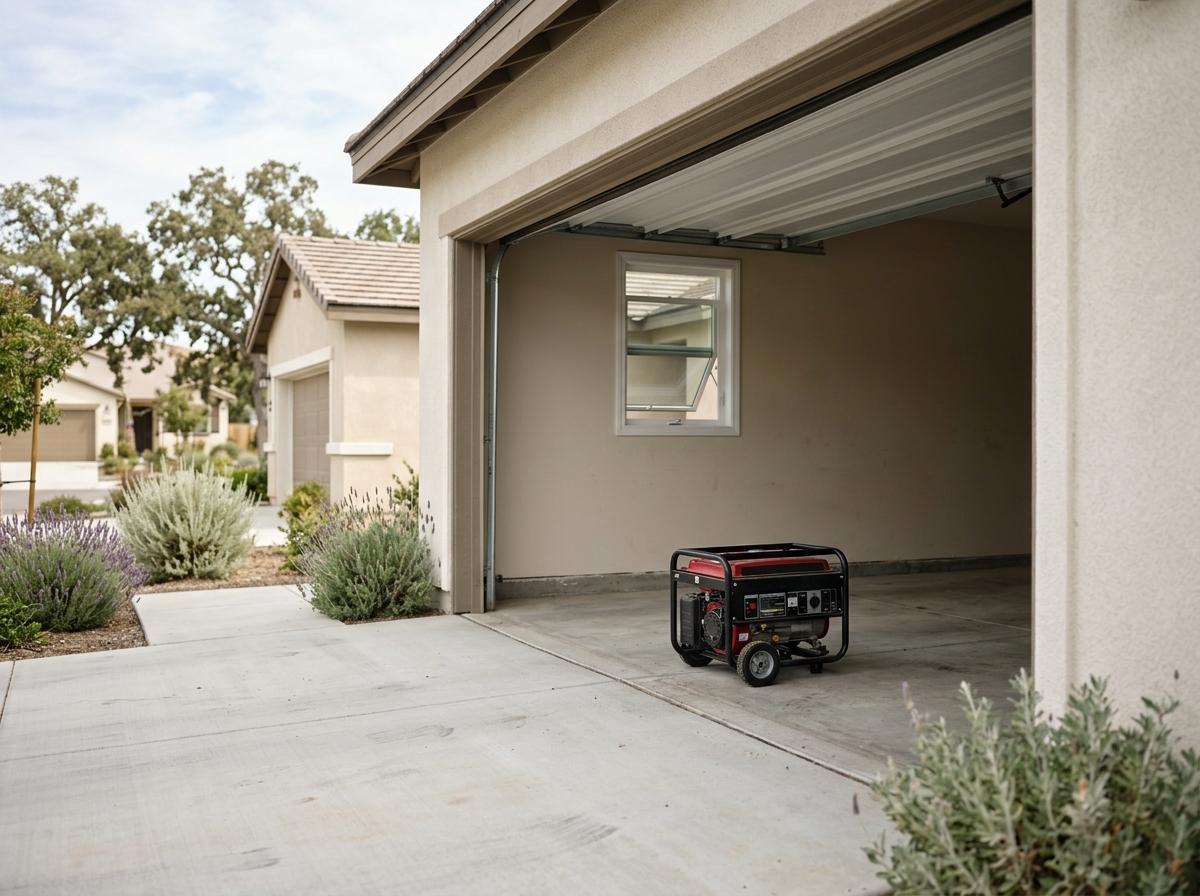
- Improper generator placement – Always operate generators outdoors, at least 20 feet from windows, doors, and vents. Use a carbon monoxide detector in the garage.
- Missing or dead CO alarms – Install battery‑operated CO alarms on every level, especially near sleeping areas. Test them monthly and replace batteries yearly.
Mitigation steps are straightforward: maintain clear vent paths, schedule routine furnace servicing, and ensure functional CO alarms. When any of these items are uncertain, a Marine One Property Inspections CO safety check can verify compliance and safety.
Image description: a residential garage door opened to reveal a portable gasoline generator sitting on a concrete slab, with the garage window partially closed, illustrating proper placement away from interior walls.
When to Schedule a CO Safety Check – Buying, Selling, or Routine Maintenance
- During a home purchase – Buyers in Orange County often request a CO safety check as part of the inspection contingency. It gives peace of mind before closing.
- Before listing a home – Sellers can address any CO issues up front, avoiding negotiation surprises and demonstrating a commitment to safety.
- Annual or bi‑annual maintenance – Even if no appliance has been replaced, the wear on venting systems can change. A yearly check aligns with seasonal HVAC service.
- After major renovations – Any work that involves moving ductwork, installing new gas appliances, or altering roof penetrations should trigger a CO re‑evaluation.
- Following a power outage – If a generator was used, a post‑event CO inspection ensures no lingering exhaust has entered the home.
Orlando Martinez recommends coordinating CO checks with other inspections—such as radon testing or mold air‑quality testing—to maximize the value of each visit. Marine One Property Inspections can bundle services, providing a comprehensive picture of indoor environmental health.
By timing the inspection to these key moments, homeowners protect their families and preserve the marketability of their property.
If you’re concerned about carbon monoxide in your Orange County home—or you’re preparing to buy, sell, or simply keep your family safe—reach out to Marine One Property Inspections. Orlando Martinez and the team are happy to answer questions, explain the inspection process, and schedule a convenient appointment. A professional CO safety check is a small investment that can save lives and give you confidence in the air you breathe.
Feel free to call, email, or use the online request form. We’re here to help you protect what matters most—your home and your loved ones.