
Understanding CrawlBot Foundation Reports for Inland Empire Homes
By Orlando Martinez · November 28, 2026 · 5 min read
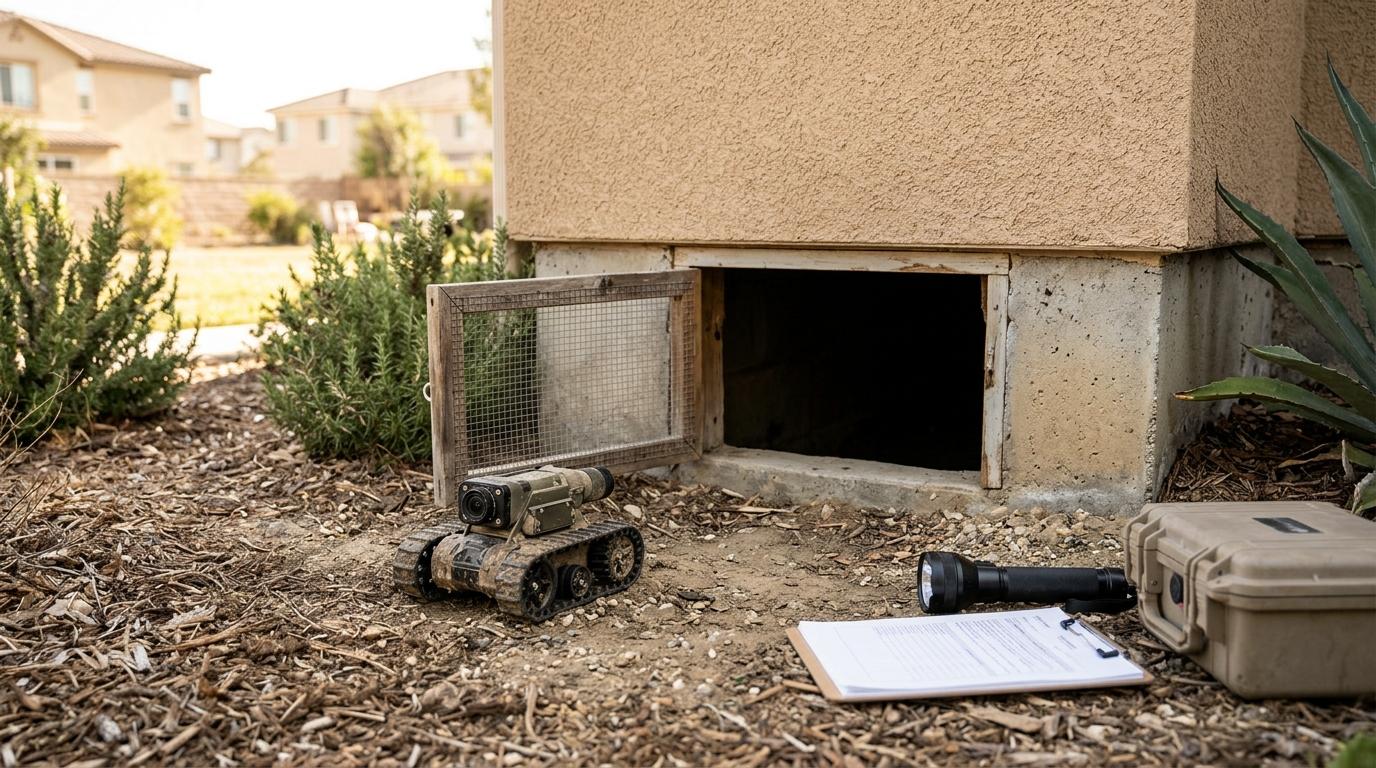
If you own or are buying a home in Temecula, Murrieta, Menifee, or anywhere across the Inland Empire, there's a good chance part of your house sits over a raised foundation with a crawlspace underneath. And there's an equally good chance you've never actually seen what's down there.
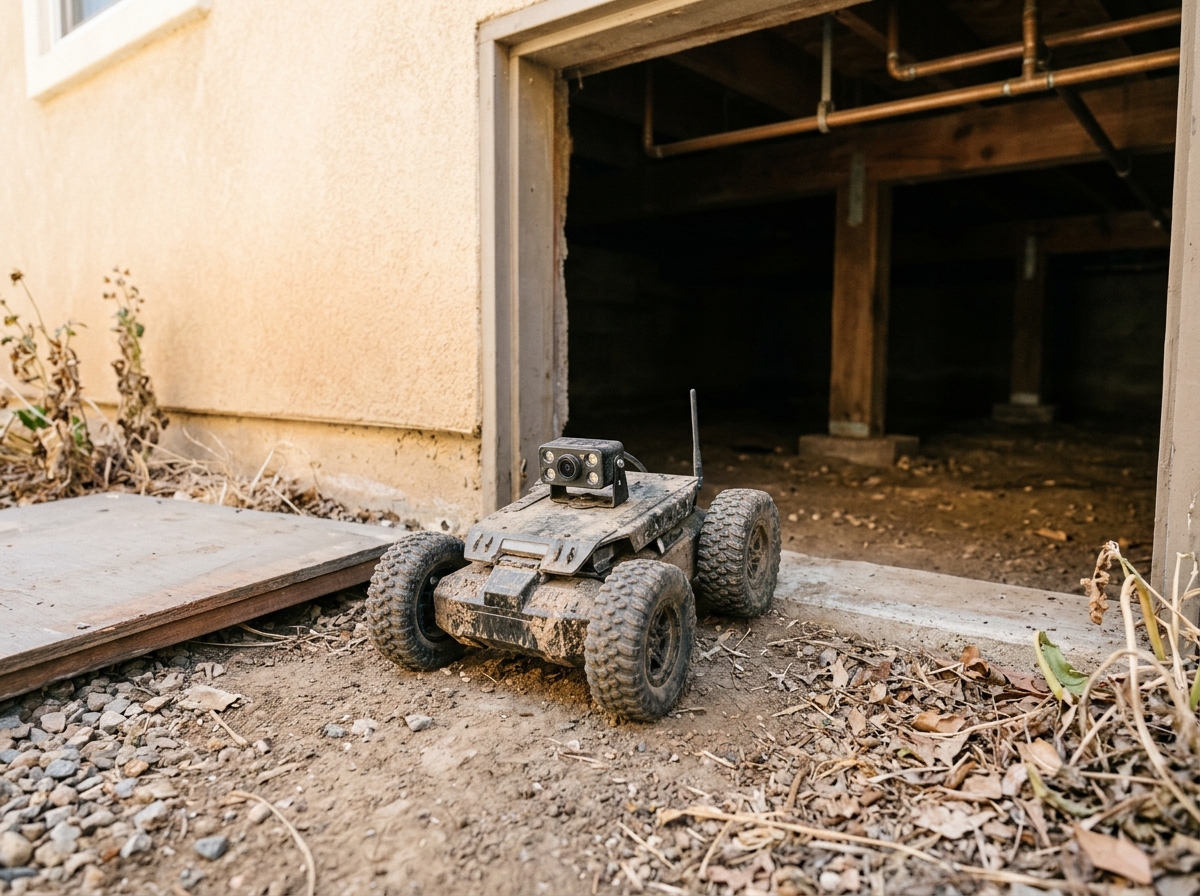
That's where the CrawlBot comes in. Instead of a flashlight and a contorted inspector squeezing through a 16-inch access hatch, a CrawlBot is a remote-controlled camera platform that rolls through the crawlspace and captures high-resolution images of the foundation, framing, plumbing, insulation, and moisture conditions.
At Marine One Property Inspections, lead inspector Orlando Martinez has been using this tool on homes from Temecula and Riverside out to San Bernardino, Anaheim, and down into San Diego County. The result is a report that's more thorough and far easier to understand than the old "here's a photo of a crack" approach. This post walks you through what you're actually looking at when you get one.
Why Crawlspaces Matter More in the Inland Empire
Inland Empire homes deal with a specific set of foundation stressors that coastal or mountain homes don't.
- Expansive clay soils. Much of the Temecula, Murrieta, and Menifee area sits on clay-heavy soil that swells when it's wet and shrinks when it's dry. That seasonal movement pushes and pulls on foundation stem walls and pier-and-post systems.
- Big temperature swings. Summer afternoons in Riverside and San Bernardino can hit triple digits, then drop 40 degrees overnight. That cycling works on wood framing and concrete alike.
- Dry winters, wet winters. Some years we get almost no rain; others we get a lot in a short window. Water pooling near the foundation finds its way into crawlspaces.
- Older housing stock. Parts of Riverside, Redlands, and Pomona have homes from the 1920s through the 1960s with original foundation hardware, undersized vents, and plumbing that's been patched more than once.
None of these are automatically problems. But they're the reasons a crawlspace inspection in this region isn't just a formality — it's where a lot of expensive surprises hide.
What's Actually in a CrawlBot Report
A CrawlBot report isn't just a pile of photos. A well-built one organizes what was found into categories you can act on. Here's what Marine One Property Inspections typically documents:
Foundation and Structure
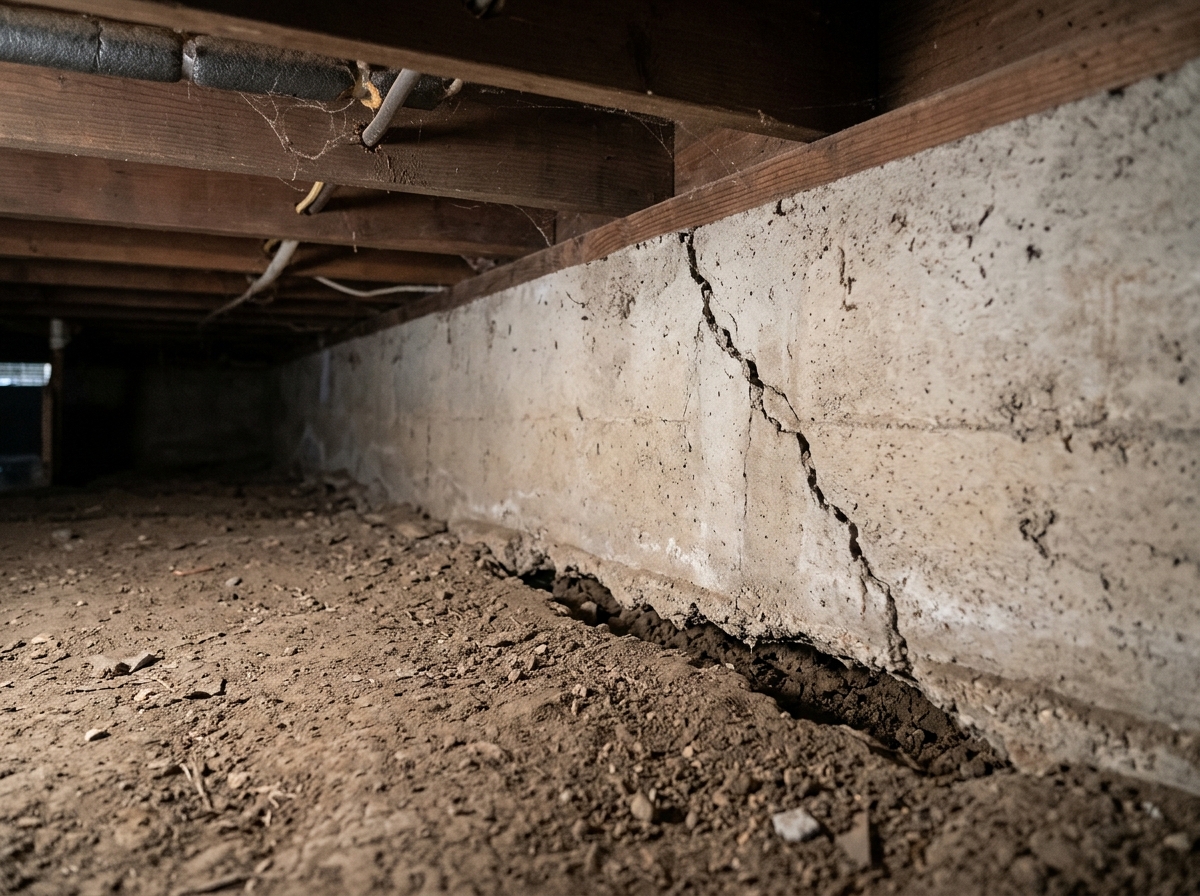
- Stem walls, footings, pier-and-post supports, and any visible cracking or displacement
- Floor joists, girders, subfloor sheathing, and beam-to-post connections
- Evidence of past repairs — sistered joists, added shims, bolted plates — and whether they look sound
Moisture and Drainage
- Standing water, damp soil, efflorescence (the white chalky residue that signals water movement through concrete), and staining
- Vapor barrier condition and coverage
- Vents — how many, whether they're blocked, and whether the crawlspace has adequate cross-ventilation
Plumbing and Mechanical
- Supply lines, drain lines, and waste pipes for leaks, corrosion, or makeshift repairs
- Ductwork condition if HVAC runs through the crawlspace
- Insulation — presence, condition, and whether it's been compromised by pests or moisture
Pest and Debris
- Termite tubes, rodent droppings, and evidence of animal entry
- Construction debris, trash, or stored items that block inspection of the structure
The Report Itself
Each finding gets a photo, a location, and a plain-language description. Severity is usually flagged so you know what's routine maintenance versus what needs a specialist's eyes.
How to Read It Without Overreacting (or Underreacting)
Here's the honest part: almost every crawlspace has something in it. A 1950s home in Riverside is going to have some cracked stem wall somewhere. That doesn't mean the house is falling down.
When you open your CrawlBot report, sort findings into three buckets:
1. Monitor. Hairline cracks, minor efflorescence, or a small area of missing vapor barrier. These are worth watching and maybe addressing on your own schedule.
2. Repair soon. Active plumbing leaks, sagging joists, blocked vents causing moisture buildup, or a vapor barrier that's mostly gone. These tend to get worse and more expensive if ignored.
3. Get a specialist. Significant foundation movement, structural repairs that look questionable, or anything involving load-bearing elements. This is where you bring in a licensed structural engineer or foundation contractor for a real evaluation. An inspection report tells you what's there — it doesn't replace an engineer's stamped opinion.
One more thing: a home inspection is visual and limited in scope. The CrawlBot can see a lot, but it can't see behind insulation, inside walls, or under soil. If a report flags something as "not fully visible," that's your cue to ask questions, not to assume the worst.
Pairing CrawlBot With the Rest of Your Inspection
The CrawlBot is one tool in a bigger kit. On a typical Marine One Property Inspections job across Temecula, San Diego, Orange County, or the Inland Empire, it often gets paired with:
- Drone roof inspection — because getting a real look at tile, flashing, and valleys from the ground doesn't cut it, especially on two-story homes.
- Sewer camera scoping — crawlspaces and sewer lines often tell the same story about a home's age and upkeep.
- Radon testing and monitoring — radon is a soil-gas issue, and crawlspaces are one of the paths it can take into a home. Testing is the only way to know.
- Mold and air quality testing — when a crawlspace report shows moisture, air quality testing helps connect the dots to what's happening inside the living space.
- Thermal imaging — useful for spotting hidden moisture, missing insulation, and electrical hot spots that a visual walkthrough alone would miss.
For sellers, a pre-listing inspection with a CrawlBot report lets you address findings before a buyer's inspector finds them. For buyers, it turns a scary unknown into a known quantity you can negotiate around. For warranty inspections on newer homes, it's a way to catch foundation and drainage issues while coverage may still apply.
Get a Straight Answer About Your Foundation
If you're buying, selling, or just want to know what's under your Inland Empire home, a CrawlBot foundation inspection is one of the most useful things you can do. It's not about finding problems for the sake of finding them — it's about giving you real information so you can make decisions with your eyes open.
Orlando Martinez and the team at Marine One Property Inspections serve Temecula and the surrounding areas, plus Riverside, San Bernardino, Anaheim, Orange County, San Diego, and the broader Inland Empire. If you've got a CrawlBot report in hand and aren't sure what it's telling you, or you'd like to schedule an inspection, reach out. We're happy to walk through the findings with you — no pressure, no scare tactics, just a clear explanation of what we saw and what it likely means for your home.