Electrical Safety: Spotting Faulty Panels in Inland Empire Homes
By Orlando Martinez · September 22, 2026 · 4 min read
When a summer thunderstorm rolls through Riverside or Temecula, many homeowners notice lights that dim, outlets that buzz, or breakers that trip for no obvious reason. Those momentary glitches are often the first warning that an electrical panel is struggling to keep up with the home’s load. As a longtime inspector in the Inland Empire, I’ve seen families pause mid‑renovation because a faulty panel could turn a simple upgrade into a safety hazard. In this post, I’ll walk you through the most common panel problems we encounter in the region and explain how a thorough inspection can catch them before they become costly repairs or fire risks.
Understanding the Panel: What Every Homeowner Should Know
A residential electrical panel—sometimes called a breaker box or service panel—is the heart of a home’s wiring system. It distributes power from the utility line to individual circuits and protects each circuit with a breaker or fuse.
Key components you’ll find behind the door
- Main breaker – the master switch that can shut off power to the entire house.
- Branch circuit breakers – individual switches for lighting, outlets, appliances, and HVAC.
- Neutral and ground bars – where the return path and safety grounding connect.
- Service entrance wires – the thick cables that bring utility power into the panel.
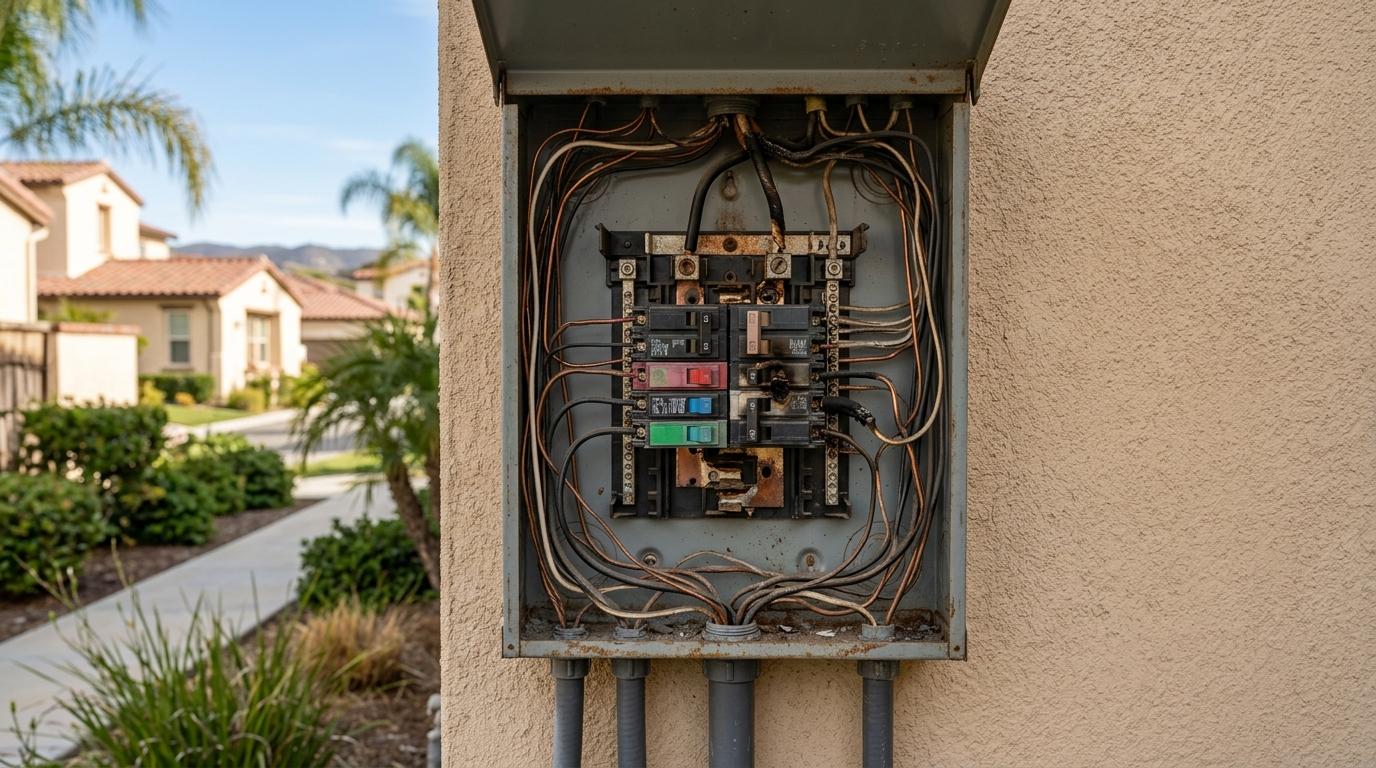
In many Inland Empire neighborhoods, homes built in the 1970s and 1980s still have the original panels. Those units were designed for lower electrical loads than today’s modern kitchens, home offices, and electric vehicle chargers demand. Knowing what a healthy panel looks like—clean, dry, with breakers that snap firmly into place—helps you spot the red flags during a walk‑through.
Image description: a close‑up of a typical gray residential breaker panel opened on a single‑family home in a Riverside suburb, showing the main breaker, rows of branch breakers, and the neutral bus bar.
Common Faults We See in Inland Empire Homes
During the past 15 years of inspections across Temecula, San Bernardino, and surrounding cities, three panel issues recur more often than others:
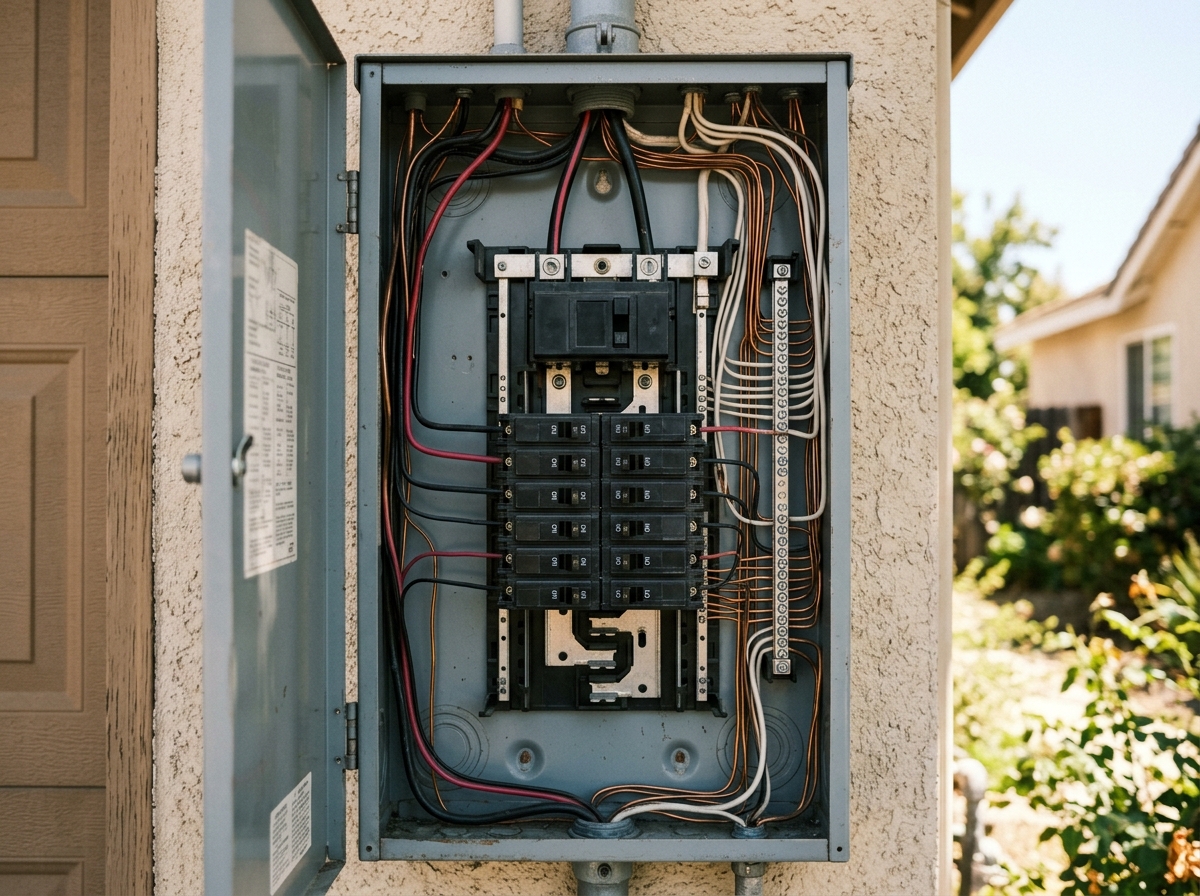
- Corroded or loose connections – The humid summer air and occasional flood events can cause moisture to seep into panel enclosures, leading to rust on terminals and a loss of conductivity.
- Outdated or undersized breakers – Early‑era panels often use 15‑amp or 20‑amp breakers for circuits that now serve high‑draw appliances like electric ranges, heat pumps, or EV chargers. Over‑loading these breakers causes frequent trips and overheating.
- Improper panel grounding – Some older homes have grounding rods that are no longer effective, or the grounding wire inside the panel is frayed. Without a solid ground, fault currents have nowhere safe to go, increasing fire risk.
Additional warning signs include:
- Darkened or discolored breaker handles (a sign of overheating).
- A panel that feels warm to the touch during a hot July afternoon.
- Buzzing or humming noises coming from the panel enclosure.
- Frequent nuisance trips after adding new appliances or a home‑office setup.
If any of these symptoms sound familiar, it’s time to have a qualified inspector evaluate the panel’s condition.
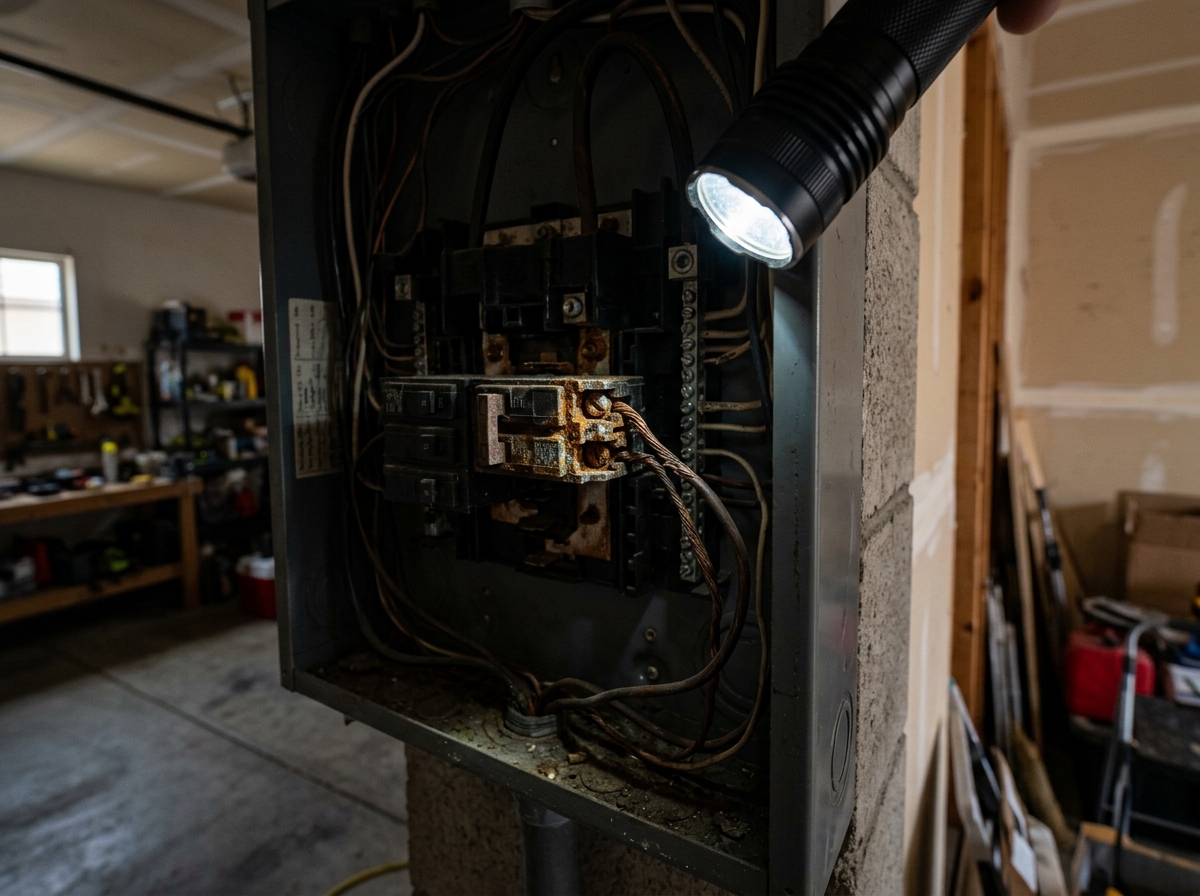
Image description: a rust‑stained breaker terminal with a loose wire inside a residential panel, illuminated by a handheld flashlight in a dimly lit garage of a San Diego‑area home.
How Marine One Property Inspections Detect Panel Problems
At Marine One Property Inspections, we combine visual inspection with technology to give you a clear picture of your electrical system’s health.
- Thermal imaging – Using a certified thermal camera, I scan the panel and surrounding wiring for hot spots that indicate loose connections or overloaded circuits. A hot spot on a breaker is a strong indicator that the unit is struggling.
- Electrical load analysis – During a residential property inspection, I observe how many high‑draw appliances are on the same circuit and note any signs of overload. This helps homeowners plan for upgrades before a breaker repeatedly trips.
- Drone roof inspection – While primarily used for roofing, the drone can also capture the condition of exterior service entrances and grounding rods that are hard to reach from the ground.
- CrawlBot foundation inspection – Moisture intrusion around the foundation can affect underground conduit and grounding. Our CrawlBot can verify that the service entrance conduit is sealed and free of water damage.
All of these services are performed under the oversight of Orlando Martinez, our lead inspector, who holds InterNACHI® certification and FAA Part 107 drone licensing. The inspection report will highlight any panel concerns, recommend immediate safety actions (like turning off the main breaker until a licensed electrician reviews it), and suggest longer‑term upgrades tailored to the home’s age and power needs.
Remember, a home inspection is visual and limited in scope; we do not replace a licensed electrician’s detailed code compliance test. However, identifying red flags early can save you from surprise outages or fire hazards down the road.
Next Steps – Keep Your Home Safe and Powered
If you’ve noticed any of the warning signs described above, or if you’re buying, selling, or simply want peace of mind, schedule a comprehensive inspection with Marine One Property Inspections. Orlando Martinez and the team will walk through your property, run a thermal scan of the panel, and provide a clear, written report that outlines what’s safe, what needs attention, and what can be upgraded for future demand.
Feel free to reach out with questions about panel safety, radon testing, mold assessments, or any of the other services we offer across Temecula, San Diego, Orange County, and the wider Inland Empire. We’re here to help you protect your home, your family, and your investment—no pressure, just professional guidance.
Call or email us today to set up an appointment, or simply reply to this article with your concerns. We’ll respond promptly and let you know how we can assist.