
Mold, Moisture, and Air Quality in Temecula Homes: What Marine One Property Inspections Looks For
By Orlando Martinez · November 1, 2026 · 6 min read
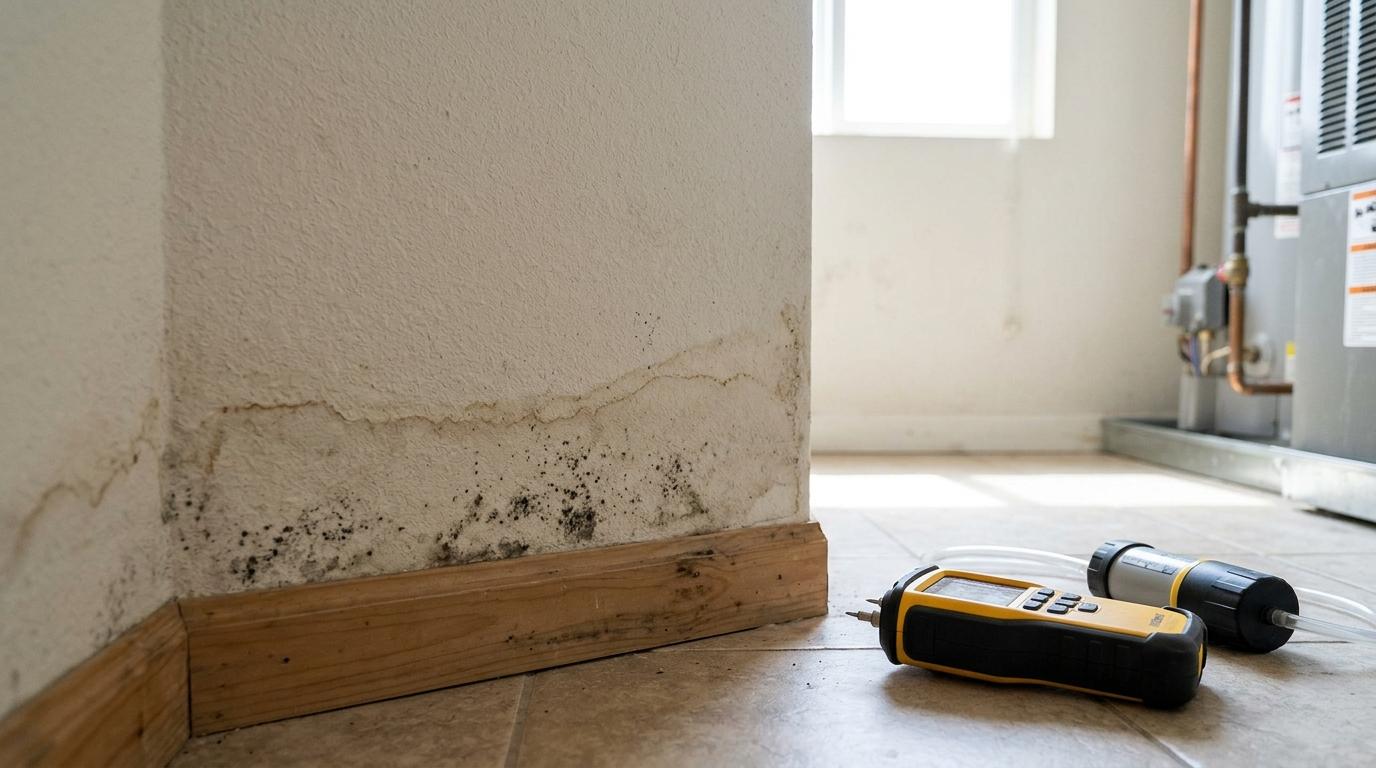
That faint musty smell in the hallway closet. The dark speckling creeping along the baseboard behind the washing machine. If you've noticed something like this in a Temecula home, you're not alone — and you're right to take it seriously.
Mold isn't really a mystery. It needs moisture, organic material (like drywall paper, wood, or dust), and time. Give it those three things and it shows up — often somewhere you never look. Here at Marine One Property Inspections, our mold and indoor air quality (IAQ) testing is built around one question: where is the moisture coming from, and how far has it spread? Because wiping down visible mold without finding the source is like mopping under a leaking sink.
This post covers how mold and air quality testing actually works, where moisture problems tend to hide in Temecula, Murrieta, and the surrounding areas, and when it makes sense to call in a professional.
Why Temecula-Area Homes Get Moisture Problems
Our climate is the interesting part. Temecula, Murrieta, and much of Riverside County sit in a semi-arid zone — hot, dry summers and mild winters. You'd think that means mold isn't a big deal here. In practice, the opposite is often true, because the moisture that feeds mold comes from inside the house, not the sky.
A few patterns we see regularly:
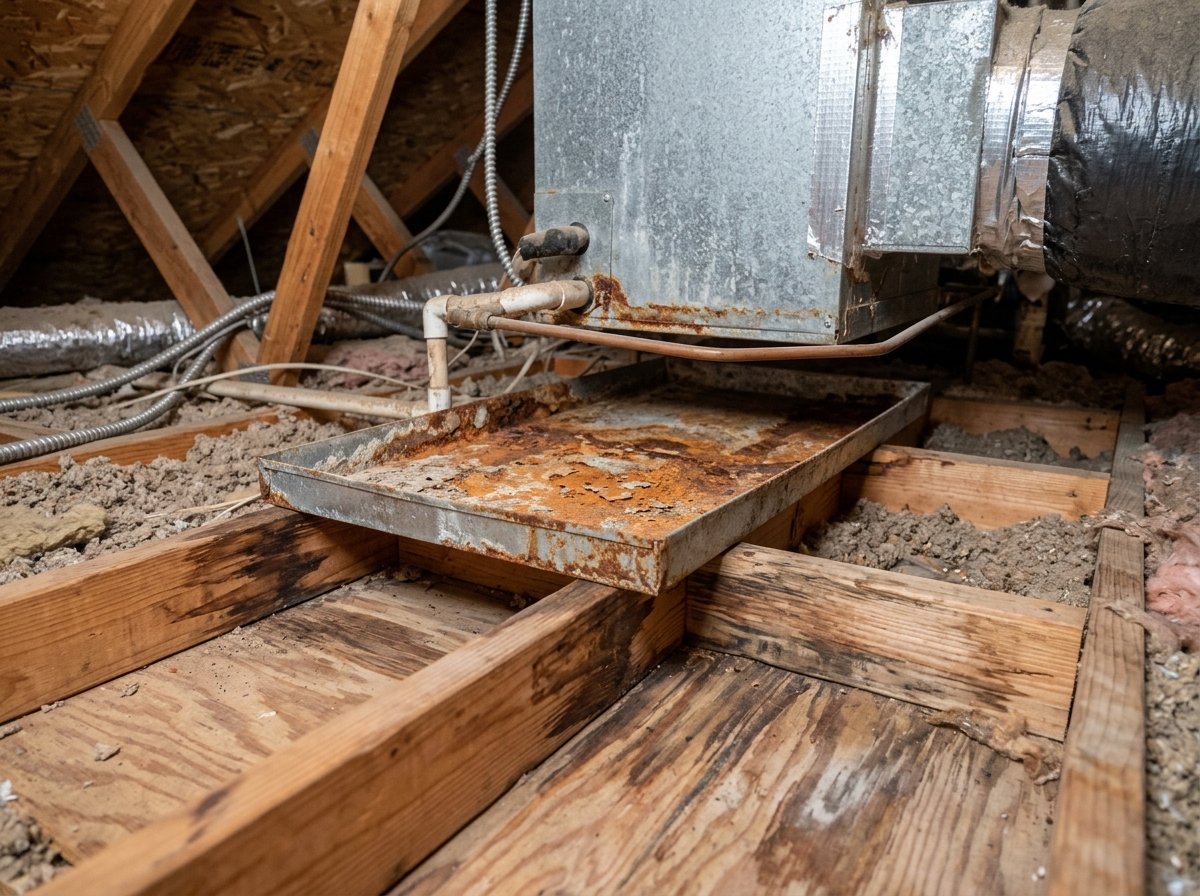
- Air conditioning and the inland heat. When it's over 100°F outside, the AC runs hard. Condensate lines clog or drain pans rust through, and water ends up in the attic, closet, or wall cavity — slowly, quietly, for months.
- Winter rain and stucco. Stucco is everywhere in Southwest Riverside County. It looks solid, but hairline cracks, failed window flashing, and missing caulk let rain into the wall assembly. Once it's in, it can't easily get out.
- Slab-on-grade construction. Many local homes have no crawlspace. When a supply line or drain leaks under a slab or behind a cabinet, the moisture wicks into flooring and drywall with nowhere to evaporate.
- Coastal influence in Orange County and San Diego. Homes closer to the coast — Anaheim, Carlsbad, Oceanside — deal with marine layer humidity and cooler, damp mornings that keep wall cavities wet longer.
In all of these cases, mold is a symptom, not the root problem. That's why testing matters: it tells you what's actually in the air and where the moisture is likely coming from.
What Mold and IAQ Testing Actually Involves
Mold testing isn't a single test — it's a small investigation. At Marine One Property Inspections, led by Orlando Martinez, the process usually looks like this:
- Walkthrough and moisture mapping. We use thermal imaging and moisture meters to find temperature differences and elevated readings inside walls, ceilings, and floors. This is often where the story starts — a cool spot on a wall that shouldn't be cool usually means moisture.
- Air sampling. We collect air samples — often one indoors in the suspect area and one outdoors as a baseline. Labs compare the two, so we're not just saying "there's mold in the air" (there's always some); we're looking at whether indoor spore types and counts are elevated or unusual compared to outside.
- Surface sampling when needed. If there's visible growth, a tape or swab sample can confirm what it is.
- Interpretation and next steps. You get a report explaining what was found, what it likely means, and what kind of follow-up makes sense.
We're careful about what testing can and can't tell you. An air sample is a snapshot of conditions at that moment. It can't tell you the exact age of a stain or guarantee a home is mold-free. It can tell you whether there's an active issue worth addressing and give you a starting point for conversations with a qualified mold remediation contractor.
We also offer radon testing and monitoring as a separate service. Radon is a colorless, odorless soil gas, and parts of Southern California have areas where elevated levels have been found. It's worth testing — but it's a different issue from mold, and it's tested differently.
Where Moisture Hides in Local Homes
Every region has its own typical hiding spots. Here are the ones we see most often across Temecula, the Inland Empire, San Diego, Orange County, and San Bernardino:
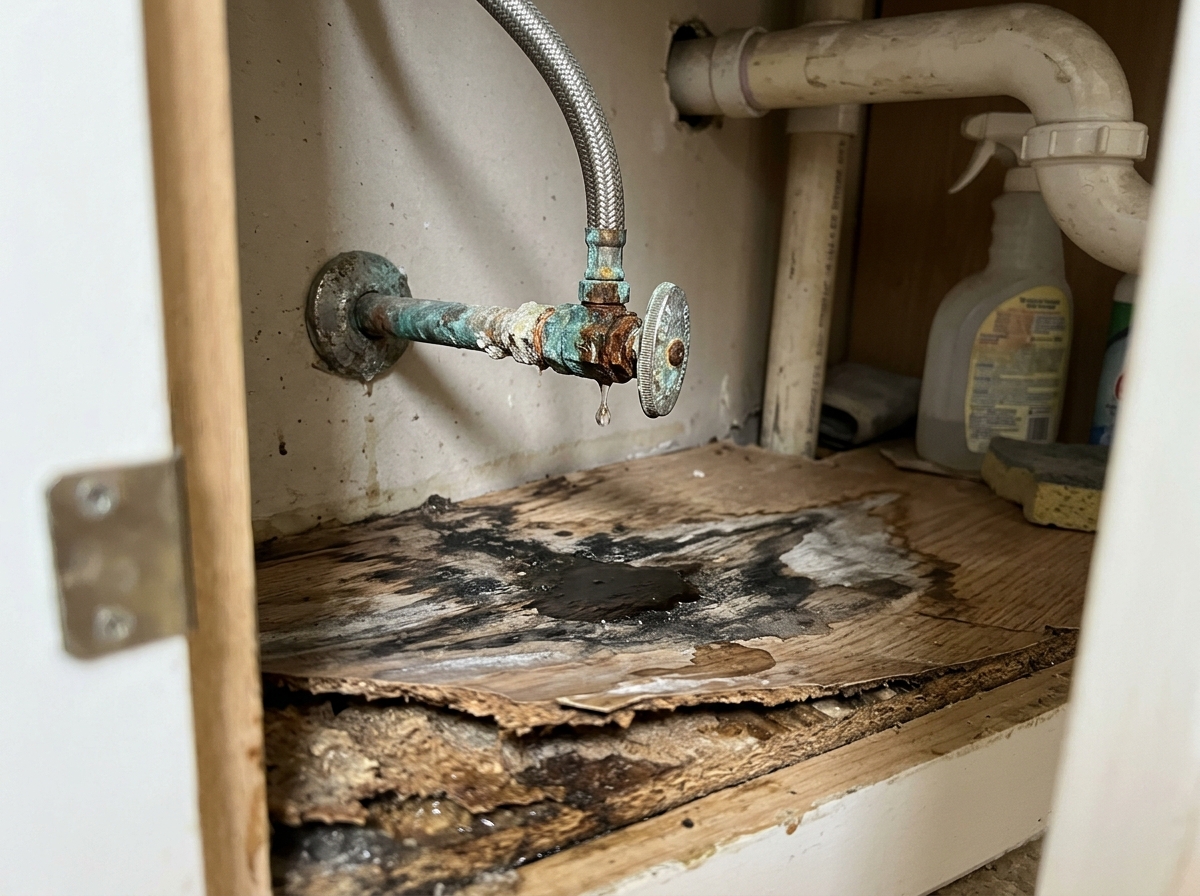
- Under kitchen and bathroom sinks. Slow drips at supply lines, P-traps, and disposal flanges. The cabinet floor looks fine until you pull everything out.
- Behind the washing machine. Supply hoses and drain standpipes. A slow drip here soaks into the wall and baseboard for years.
- Attics. AC condensate leaks, roof flashing failures, and — in older homes — bathroom exhaust fans venting directly into the attic instead of outside. That last one is a classic mold setup.
- Crawlspaces. Homes with raised foundations in Riverside and San Bernardino counties often have damp, poorly ventilated crawlspaces. We use our CrawlBot to inspect these areas safely and get eyes on the soil, joists, and vapor barrier.
- Windows and sliding doors. Failed flashing and worn weatherstripping let water into the wall cavity during winter storms.
- Pool and spa equipment areas. Pumps, heaters, and plumbing that leak slowly onto adjacent walls or into nearby structures.
If you're buying a home, a general home inspection plus targeted moisture investigation is the practical way to catch these before closing. If you're selling, a seller's inspection can help you find and address issues before they become negotiation surprises.
What You Can Check Yourself — and When to Call a Pro
You don't need special equipment to notice early warning signs. A few things worth a look:
- Smell. A persistent musty or earthy odor, especially in one room or closet, is a strong clue.
- Visible signs. Dark speckling, fuzzy growth, peeling paint, bubbling drywall, or warped baseboards.
- Water history. Any past leak, flood, or appliance failure — even one you think was fixed.
- Condensation. Foggy windows, sweating pipes, or damp walls in winter.
- Health symptoms. Some people are sensitive to mold and damp indoor environments. If you or a family member notice symptoms that seem tied to being in the home, that's a conversation to have with a qualified healthcare professional — we don't offer medical advice, but we can help you understand what's in the air.
When should you call? If you've found visible growth larger than a small patch, if there's a musty smell you can't trace, if there's been any significant water intrusion, or if you're buying a home and want to know what you're getting into. Mold testing is not a substitute for finding and fixing the water source — it's a tool to help you understand the scope of the problem and make informed decisions.
Scheduling Mold and Air Quality Testing with Marine One
If something in your home doesn't smell or look right, the best next step is often a conversation, not a commitment. Marine One Property Inspections serves Temecula, Murrieta, and the surrounding areas, along with San Diego, Orange County, the Inland Empire, San Bernardino, Riverside, and Anaheim.
Our services include:
- Mold and air quality testing
- Radon testing and monitoring
- Sewer camera scoping
- CrawlBot foundation inspections
- Drone roof inspections
- Residential, pool and spa, seller's, and warranty inspections
- Multi-unit and commercial property inspections
Orlando Martinez brings 30+ years of building and electrical contracting experience and 15 years of building inspections to every job, and we're equipped to work with thermal imaging and drone technology when the situation calls for it.
If you'd like to talk through what you're seeing — or smelling — reach out to Marine One Property Inspections. We're happy to answer questions, explain what testing would involve, and help you decide whether it's the right step for your situation. No pressure, no sales pitch — just a straight answer from someone who's seen it before.