
Mold Air Testing in Temecula: What It Is and How It's Performed
By Orlando Martinez · November 5, 2026 · 6 min read
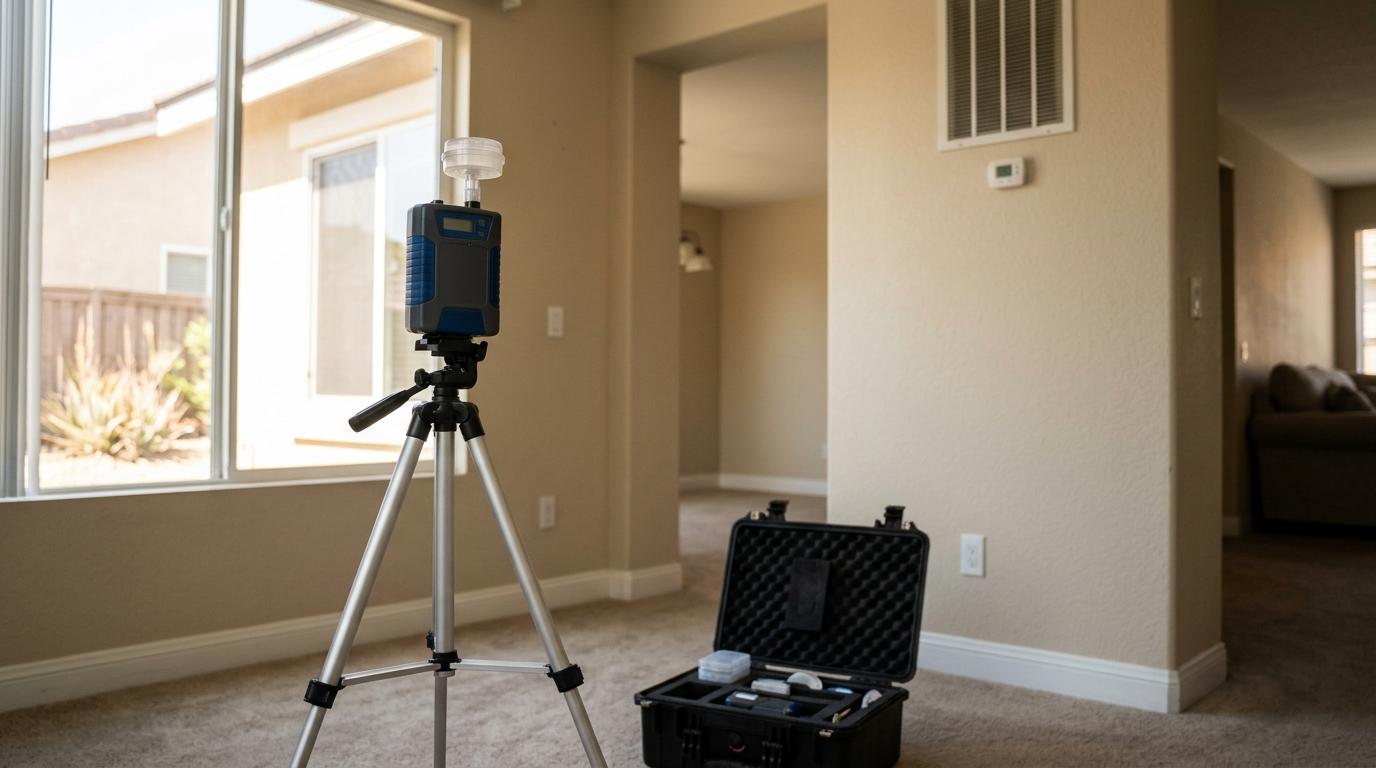
Every summer, we get the same call from homeowners in Temecula, Murrieta, and down into San Diego County: "There's a musty smell in the hallway, but I can't see anything." Sometimes it's a bathroom with poor ventilation. Sometimes it's a slow supply-line leak behind a cabinet. Sometimes it's a crawl space that never quite dries out after a wet winter.
Mold doesn't need a visible stain to be present. It needs moisture, organic material, and time — and here in the Inland Empire and Orange County, our climate swings between dry heat and occasional heavy rain, which is exactly the kind of cycle that pushes moisture into places you don't look. That's where mold air testing comes in. It's one of the tools we use at Marine One Property Inspections when the nose knows something the eyes can't confirm.
This post explains what mold air testing is, how the process actually works, and when it's worth doing versus when a visual inspection is enough.
What Mold Air Testing Actually Measures
Mold air testing is not a mold detector. It doesn't beep when mold is present, and it doesn't tell you whether your home is "safe" or "unsafe." What it does is sample the air and give you data about what's floating in it.
Most residential mold air testing combines two things:
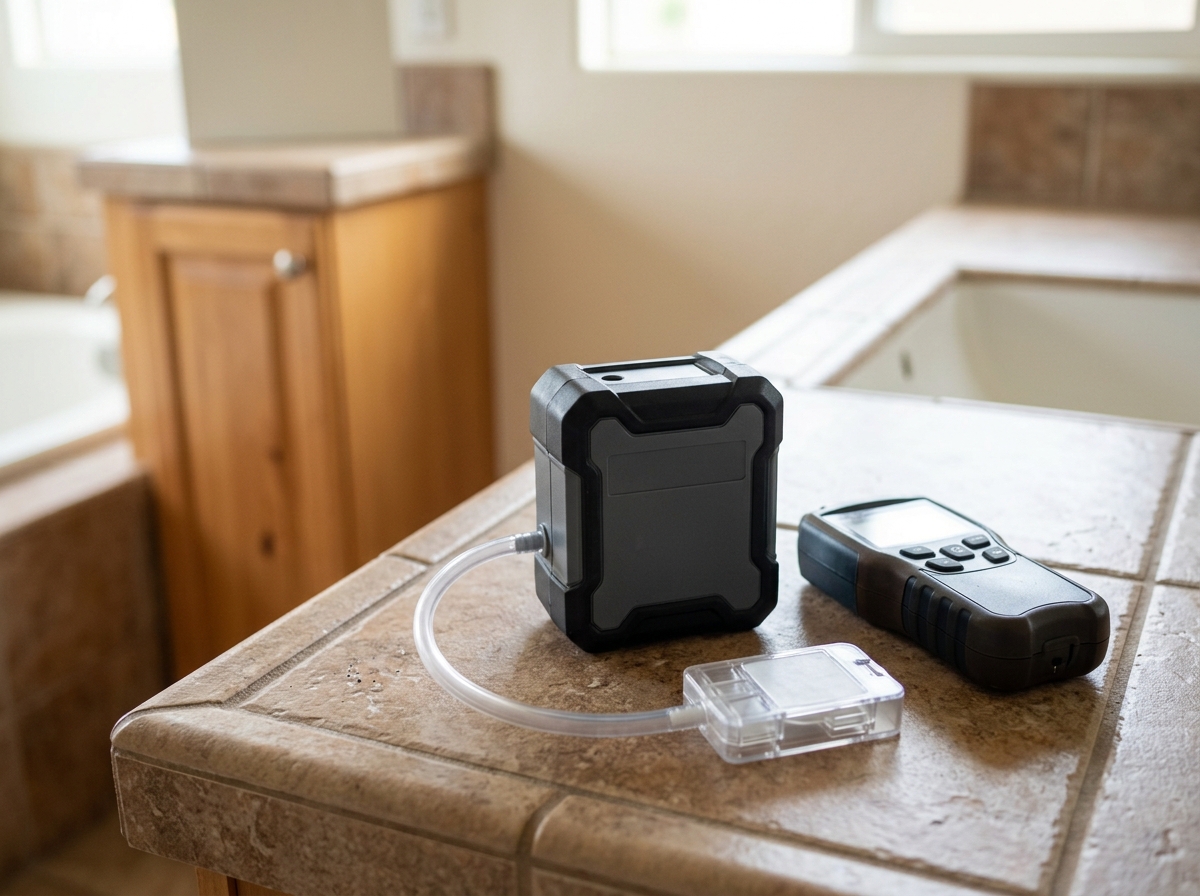
- Spore trap sampling — a calibrated pump pulls a set volume of air through a small cassette, and the spores in that air stick to a slide inside. The cassette goes to an accredited lab, where a technician identifies and counts spores under a microscope.
- Moisture and humidity readings — because airborne spore counts mean very little without context. A reading of 800 spores per cubic meter outdoors on a windy day is normal. The same number inside a sealed bedroom tells a different story.
When we test for clients in Riverside, San Bernardino, or Anaheim, we typically run at least one outdoor control sample alongside the indoor samples. The outdoor sample is the baseline — it accounts for what's naturally in the air that day. The comparison between indoor and outdoor is where the useful information lives.
If you've also asked us for mold air quality testing as part of a broader inspection, the lab results get interpreted alongside what we found visually: water staining, elevated moisture meter readings, poor bathroom exhaust, or a crawl space with no vapor barrier.
How the Process Works, Step by Step
Here's what a mold air test looks like in practice, from the homeowner's point of view.
1. Walkthrough and problem areas. We start by asking where you've noticed odors, past leaks, or condensation. In Temecula-area homes, common suspects include second-floor bathrooms, laundry rooms, HVAC closets, and under-sink cabinets. In older Riverside and San Bernardino properties, we look harder at crawl spaces and attics.
2. Moisture mapping. Before any air sampling, we use moisture meters and thermal imaging to look for hidden moisture. Mold needs water — finding the water source matters more than counting spores.
3. Air sampling. We run the pump for a set time in each chosen location, usually one sample per problem area plus one outdoor control. A typical test is two to four samples.
4. Lab analysis. Samples ship to an accredited laboratory. Turnaround is usually a few business days, though it can vary.
5. Interpretation. The lab report gives genus-level identifications and counts. We then put those numbers next to the outdoor baseline, the moisture readings, and what we saw during the walkthrough. A report is not a diagnosis — it's a piece of evidence, and it only makes sense alongside the rest.
One important limit: air testing does not tell you where mold is growing. It tells you what's airborne at the moment of sampling. Finding the source is a separate step, and it's often the more important one.
When Mold Air Testing Makes Sense — and When It Doesn't
Air testing is a tool, not a default. Here's how we think about it at Marine One Property Inspections.
It's usually worth considering when:
- There's a persistent musty odor with no visible cause
- Someone in the household has ongoing respiratory symptoms that seem worse at home (talk to your doctor about health questions — that's outside our lane)
- You've had a known water intrusion event — a slab leak, roof leak, or appliance failure — and want to confirm the area dried properly
- You're buying a home in the Inland Empire or San Diego County and the inspection turned up past water staining with no clear explanation
- You're selling, and a buyer's agent has raised mold concerns you want to address with data
It's often not the right first step when:
- You can already see visible mold growth. In that case, the priority is fixing the moisture source and having the affected area addressed by a qualified mold remediation professional.
- A single small spot near a shower is the only issue. Ventilation and cleaning may solve it.
- You're looking for a "pass/fail" answer. Air testing doesn't provide one, and anyone who tells you it does is overselling it.
If you're not sure which category you're in, that's a fine reason to call and ask. We'd rather talk you out of an unnecessary test than sell you one.
Pairing Air Testing With the Rest of the Inspection
Mold air testing rarely stands alone in a good inspection. It works best alongside the other tools we bring to a property.
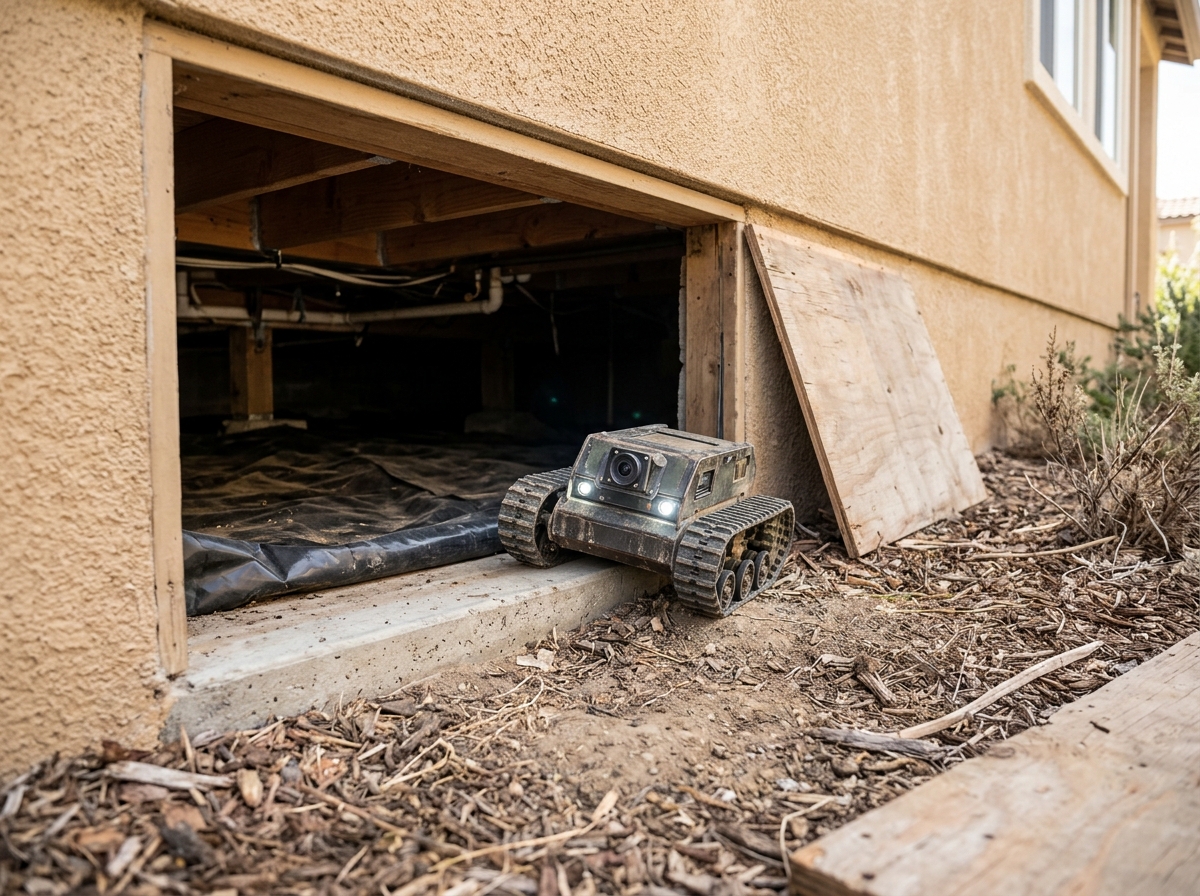
- CrawlBot foundation inspection — crawl spaces are one of the most common mold sources in older Riverside and San Bernardino homes. A camera crawl gives us a look without anyone squeezing through a 16-inch access hatch.
- Drone roof inspection — roof leaks are a leading cause of attic and ceiling moisture. An FAA Part 107 licensed drone flight lets us document roof conditions safely on steep or fragile roofs.
- Thermal imaging — temperature differences can reveal hidden moisture behind walls, under floors, and around windows.
- Sewer camera scoping — not a mold tool directly, but a failing sewer line can cause chronic moisture at the slab, which is worth knowing before you close.
- Pool and spa inspections — pool equipment areas and decks are another spot where chronic moisture hides in plain sight.
For multi-unit and commercial properties in Anaheim, Orange County, or the Inland Empire, we can scale air sampling across multiple units and common areas. For sellers, a pre-listing inspection that includes moisture mapping and, if warranted, air testing can head off surprises before a buyer's inspector finds them.
One honest note: no inspection — visual, thermal, or air-based — can find every issue in a home. Inspections are limited in scope, and mold can hide in wall cavities, under flooring, and inside HVAC ductwork where no sampling method reaches with certainty. We tell clients that upfront.
Have Questions About Mold in Your Home? Let's Talk
If you're dealing with a musty smell, a past leak, or a home purchase where moisture came up in the report, the next step is a conversation — not a sales pitch.
Marine One Property Inspections serves Temecula and the surrounding areas, plus San Diego, Orange County, the Inland Empire, San Bernardino, Riverside, and Anaheim. Lead inspector Orlando Martinez brings decades of building and electrical contracting experience to every walkthrough, and mold air quality testing is one of several tools we can bring to the table when it's the right fit.
Give us a call or send a message and tell us what you're seeing, smelling, or worried about. We'll tell you honestly whether air testing is likely to help, what it can and can't tell you, and what else might be worth checking. If you'd rather just schedule a full residential inspection and let us evaluate moisture as part of it, that works too.
Either way, you'll get a straight answer from someone who's walked a lot of Temecula-area homes.