
Mold in Your Temecula Home: Is It Actually Bad? A Local Inspector's Straight Answer
By Orlando Martinez · October 31, 2026 · 6 min read
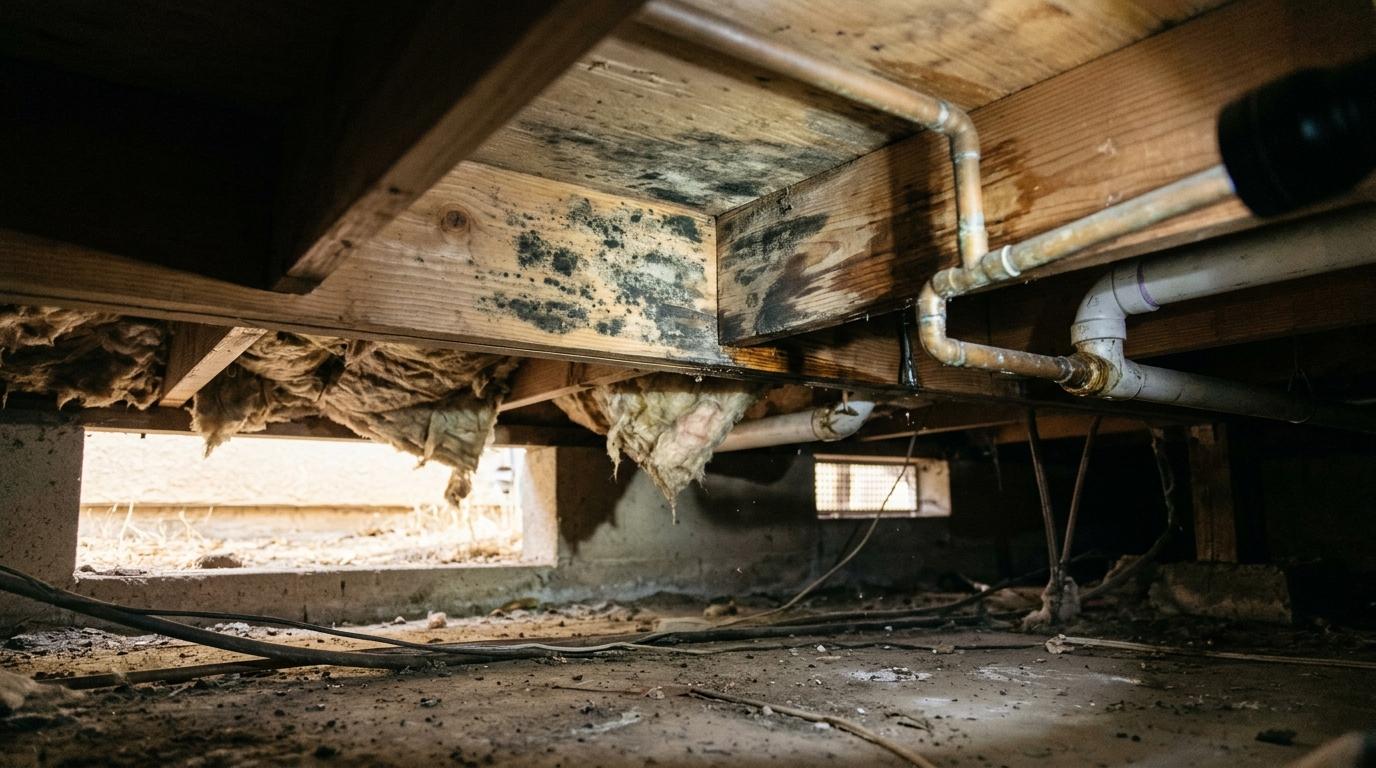
Every spring, we get calls from homeowners in Temecula, Murrieta, and Menifee who found a dark stain on the ceiling or a musty smell under the kitchen sink. The first question is almost always the same: Is this actually bad, or can I just wipe it off?
It's a fair question. Mold is a natural part of the environment — it's everywhere outdoors. The problem isn't that mold exists. The problem is when it starts growing inside your home, where it shouldn't be.
At Marine One Property Inspections, our lead inspector Orlando Martinez has walked through hundreds of homes across Temecula, San Diego, Orange County, the Inland Empire, and Riverside. The pattern is consistent: mold almost never appears on its own. It shows up after water does — a slow leak, a clogged condensate line, a roof flashing that failed during a storm, or an HVAC closet that stays damp all summer.
So let's talk about what mold actually means for your house, what it doesn't mean, and how to think about it clearly.
Why Temecula-Area Homes Are Prime Real Estate for Mold
You might assume mold is a humid-climate problem. It's not. It's a moisture-duration problem — mold needs water and time, not just humidity.
Here in the Temecula Valley, we get long dry stretches followed by intense rain events. When that rain hits, water finds the weak spots: aging roof flashings on 1990s-era tract homes, stucco cracks on south-facing walls, and grading that slowly shifts and starts pushing water toward the foundation instead of away from it.
Add in a few local realities:
- Slab and crawlspace homes across Riverside and San Bernardino counties often trap moisture under the floor, especially where vapor barriers are missing or torn.
- Attic HVAC units — common in Inland Empire construction — drip condensation into insulation and framing during hot months, creating a damp pocket that never dries out.
- Coastal-influenced areas like Anaheim and parts of Orange County stay cooler and hold moisture longer after rain, giving mold more time to establish.
- Closed-up homes — vacation properties, rentals between tenants, or homes sealed tight during fire season — have no airflow to dry things out.
Mold doesn't need a flood. It needs about 24 to 48 hours of sustained moisture on a surface like drywall, wood framing, or insulation. That's a very low bar.
Is Mold Actually Bad? Separating Real Risks From Hype
Here's the honest answer: it depends on where it is, how much there is, and what's feeding it.
The real concerns
- Structural damage over time. Mold itself doesn't eat wood the way termites do, but the moisture causing the mold does. Wet framing, rotting subfloor, and deteriorating drywall are the actual structural problems — mold is just the visible symptom.
- Indoor air quality. Mold releases spores and, in some cases, microbial volatile compounds. For people with allergies, asthma, or compromised immune systems, that can trigger symptoms. This is a health topic, so if you or a family member are reacting, talk to a qualified medical professional — not an inspector.
- It usually signals a hidden problem. If you see mold on a ceiling, the leak is often somewhere else. The mold is the messenger.
What mold is not
- It's not automatically a "toxic black mold" situation. Color alone doesn't tell you the type or the risk.
- It's not a reason to panic-walk away from a house. It's a reason to investigate.
- It's not something a coat of paint or a bleach wipe permanently fixes. If the moisture source is still active, it comes back.
At Marine One, we don't diagnose mold species or give medical opinions. What we do is find the moisture source and document what we can see — because that's the part that actually matters for the home.
Where We Find Mold Most Often During Inspections
After years of inspections across Temecula and the surrounding regions, the same locations come up again and again:
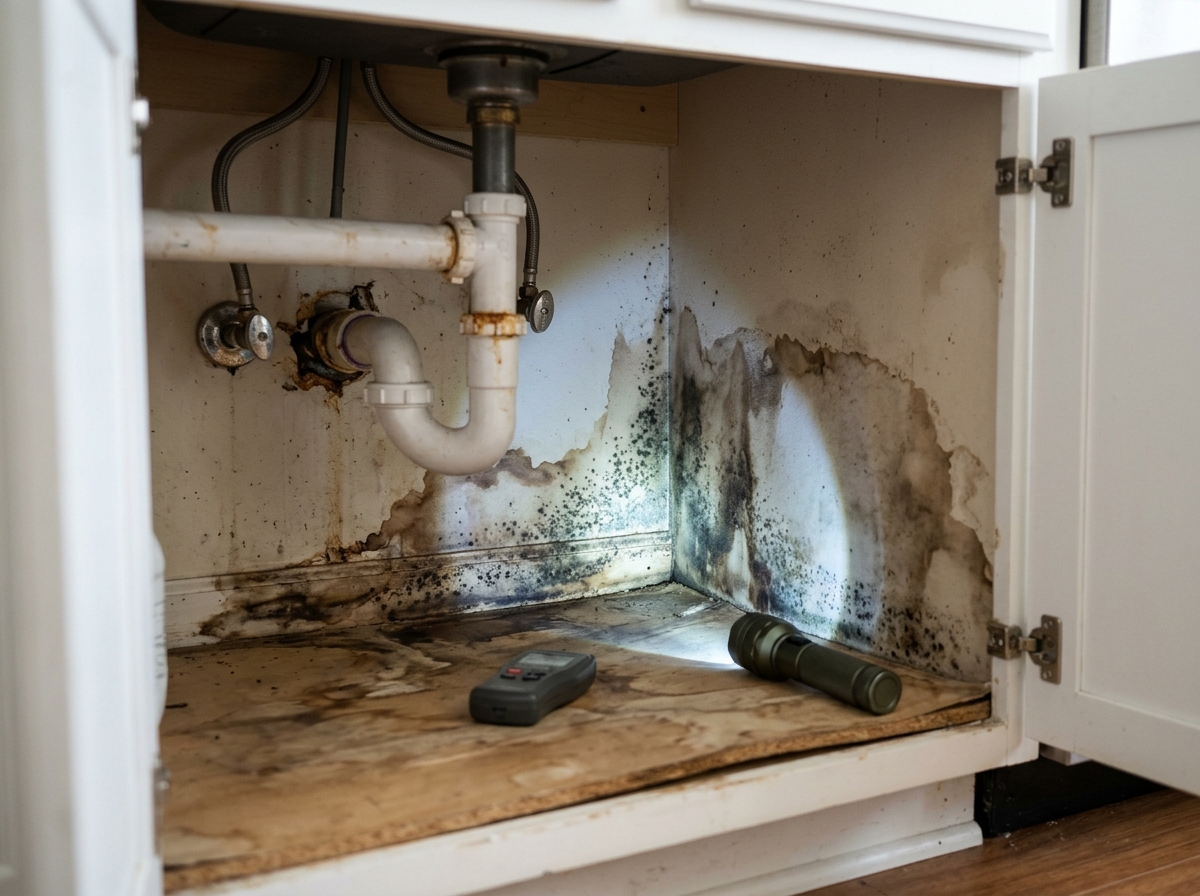
- Under sinks and behind dishwashers — slow supply line or drain leaks that go unnoticed for months.
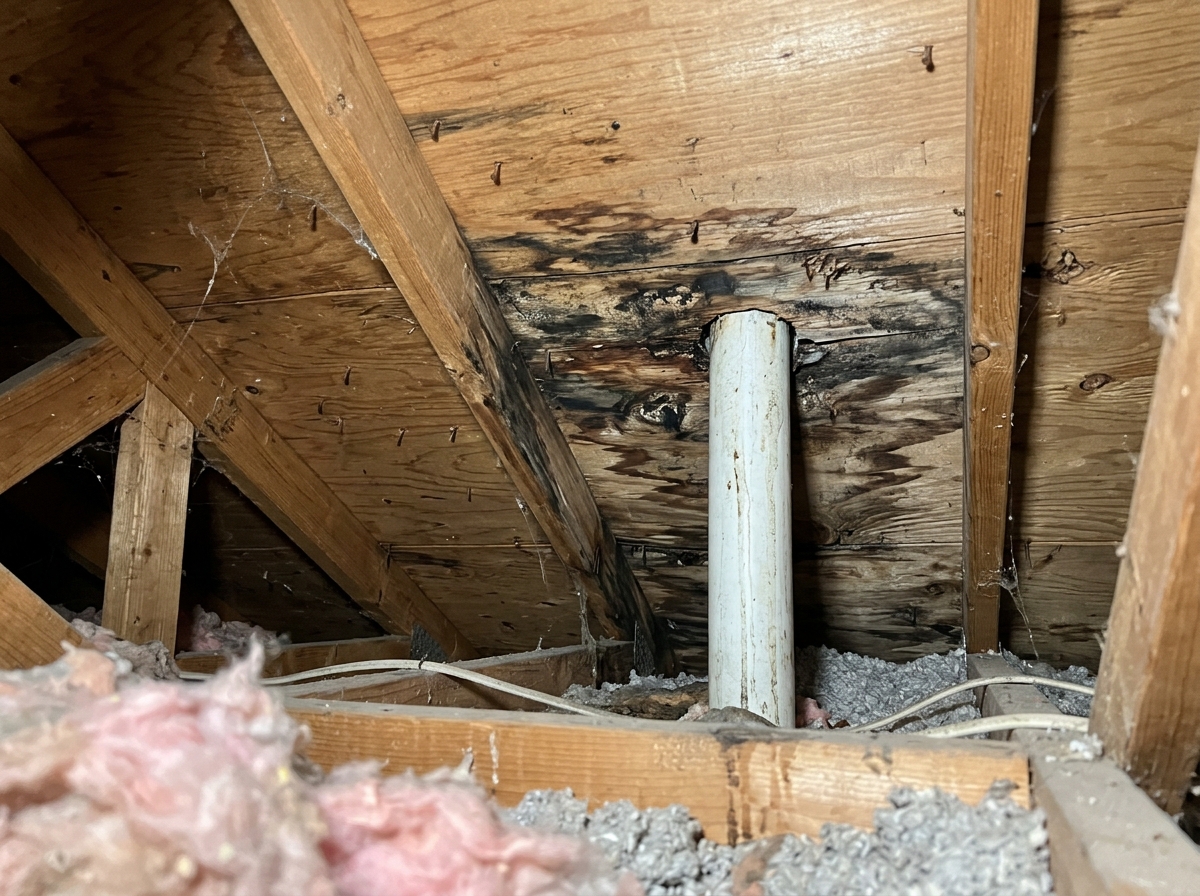
- Attic sheathing near roof penetrations — especially around chimneys, skylights, and vent stacks after a wet winter.
- Crawlspaces — where ground moisture, poor ventilation, and torn vapor barriers combine. This is where our CrawlBot foundation inspection earns its keep, getting into spaces a person can't easily reach.
- Around windows and exterior doors — failed caulking and flashing let water in behind the stucco.
- HVAC air handlers and ductwork — condensate pans that don't drain properly, or duct insulation that stays damp.
- Bathrooms without working exhaust fans — moisture that never leaves the room.
- Roofs — missing or lifted shingles, especially after Santa Ana wind events. Our drone roof inspection lets us look closely at areas that aren't safe to walk.
If you're buying a home in the Inland Empire or San Diego County, this list is essentially your mold-risk checklist. It's also why a general visual inspection and a moisture-focused inspection aren't the same thing.
What to Do If You Suspect Mold — and How Testing Fits In
If you've found something suspicious, here's a sensible order of operations:
- Stop the water first. Fix the leak, clear the condensate line, correct the grading. Mold remediation without fixing the source is wasted money.
- Document what you see. Photos, location, and approximate size help whoever you bring in next.
- Get a professional opinion on the moisture source. This is where a home inspection focused on the affected area helps — we trace where the water is coming from, not just where the stain is.
- Consider air quality testing if there's a persistent musty odor but no visible growth, or if occupants are experiencing symptoms. Our mold air quality testing measures what's actually in the air — you can't see spores, and a musty smell with no visible mold often means it's hidden behind a wall or under flooring.
- For radon, which is a separate but related indoor-air concern, we offer radon testing and monitoring. Radon is odorless and invisible, and it's a genuinely important test for many homes in our region — worth a conversation on its own.
- Bring in a qualified remediation professional for cleanup if growth is significant. We don't do remediation — we inspect and report, so there's no conflict of interest.
One thing to keep in mind: an inspection is visual and limited in scope. We can't see inside every wall cavity, and we won't claim to. What we can do is give you a clear, honest picture of what's visible, what's likely, and what deserves a closer look.
The Bottom Line for Temecula Homeowners, Buyers, and Sellers
Mold is rarely a catastrophe, and it's almost never "nothing." It's a signal — your home is telling you water is getting in somewhere it shouldn't.
For buyers, that signal matters during your inspection contingency window. Finding a moisture issue before you close gives you options. For sellers, addressing a known moisture problem before listing avoids surprises mid-escrow — and our seller inspections and warranty inspections are built for exactly that. For current homeowners, a periodic check of the usual suspects — attic, crawlspace, under-sink cabinets, roof — is cheap insurance against a much bigger repair later.
If you own a pool or spa, we also inspect those, since equipment pads and surrounding decks are common moisture zones. And for multi-unit or commercial properties across Riverside, San Bernardino, and Orange County, we handle those too.
The point isn't to scare you. It's to give you facts so you can make a good decision.
Have Questions? Let's Take a Look Together
If you've spotted something that might be mold, or you just have a musty smell you can't place, you don't have to figure it out alone. Marine One Property Inspections serves Temecula and the surrounding areas — including San Diego, Orange County, the Inland Empire, San Bernardino, Riverside, and Anaheim — and Orlando Martinez is happy to talk through what you're seeing before you commit to anything.
Whether it's a mold air quality test, a CrawlBot foundation inspection, a drone roof inspection, or a full residential property inspection, we'll give you a straight answer about what we find and what it means.
Reach out to schedule an inspection or just ask a question. No pressure, no sales pitch — just a local inspector who's seen this before and can help you sort it out.