
Mold Test and Particle Testing in Temecula Homes: What the Air in Your House Is Telling You
By Orlando Martinez · October 22, 2026 · 5 min read
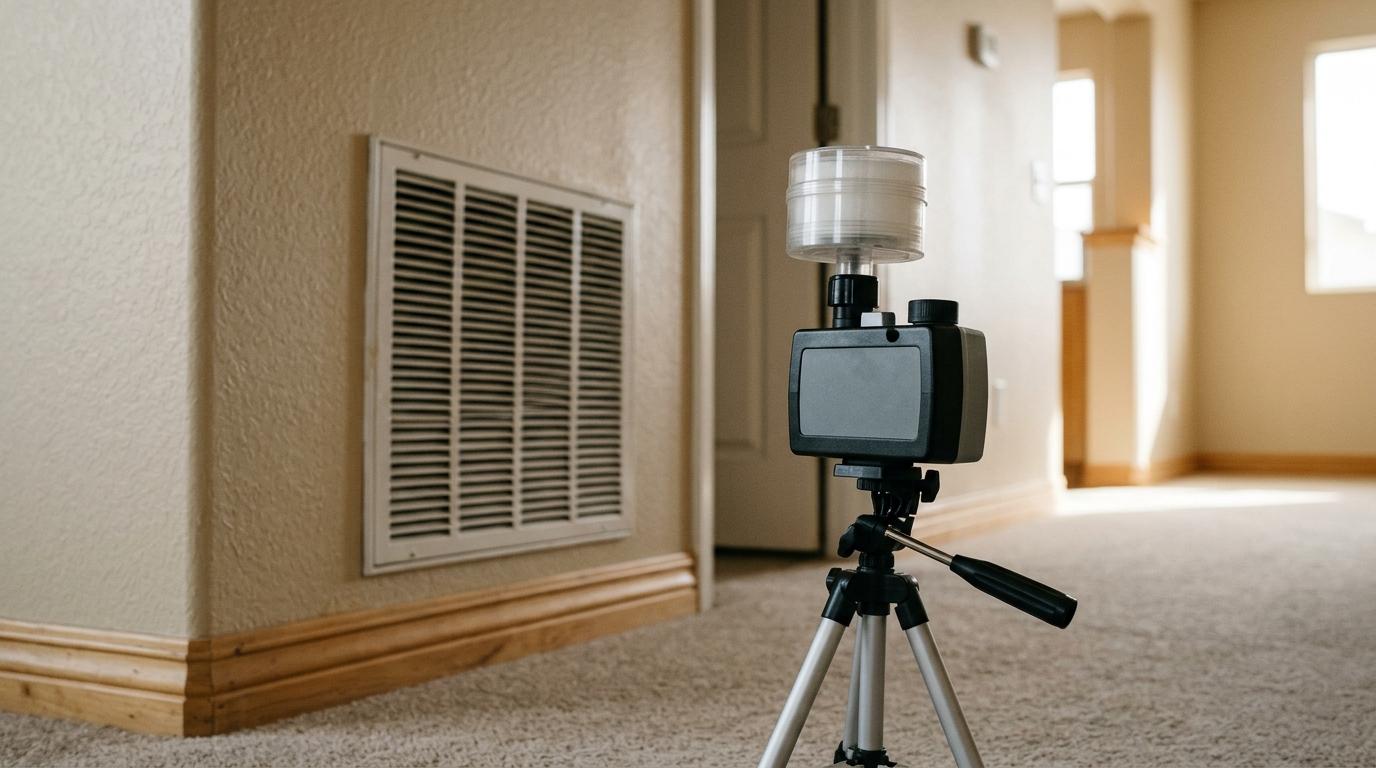
A homeowner in Murrieta calls me because the hallway by the guest bathroom smells like a wet towel, but there's no visible stain anywhere. A buyer in Temecula is worried about dark spotting near an attic vent in a 1990s two-story. Someone in Riverside just had a washing machine supply line let go and wants to know if the air is safe now.
These are the calls where mold and air particle testing earns its keep. You can't always see mold — but the air in a house carries clues: spores, dust fragments, fiberglass, and other particles that settle into a lab sample and tell a story.
At Marine One Property Inspections, lead inspector Orlando Martinez uses air quality and surface sampling as part of the inspection toolkit across Temecula, Riverside, San Diego, Orange County, the Inland Empire, and San Bernardino. Here's how it works, in plain language.
Why Air Testing Beats Just Looking Around
Mold needs three things: moisture, a food source (drywall paper, wood framing, carpet backing), and time. In our climate, the moisture part is rarely obvious. We get long dry stretches, then a wet winter, then marine layer mornings that leave condensation on north-facing windows in Temecula and Temecula-adjacent valleys.
A visual inspection finds mold you can see. Air testing finds what you can't:
- Elevated spore counts in a bedroom compared to outdoor air
- Particular mold types that point toward a hidden moisture source
- Particle load from dust, insulation fibers, or construction debris
- Differences room to room, which helps narrow down where a problem lives
That last point matters. If the living room reads normal and the back bedroom reads high, we've learned something — even before anyone opens a wall.
How a Mold and Particle Test Actually Works
There's nothing mysterious about it. The process is straightforward:
- Walk and look first. Orlando inspects the home — attic, crawlspace, bathrooms, laundry, under sinks, around windows, HVAC closet — looking for moisture staining, efflorescence, past repairs, and that musty odor.
- Set an outdoor baseline. We sample outside air so your indoor numbers have something to be compared against. Indoor results without an outdoor control are hard to interpret.
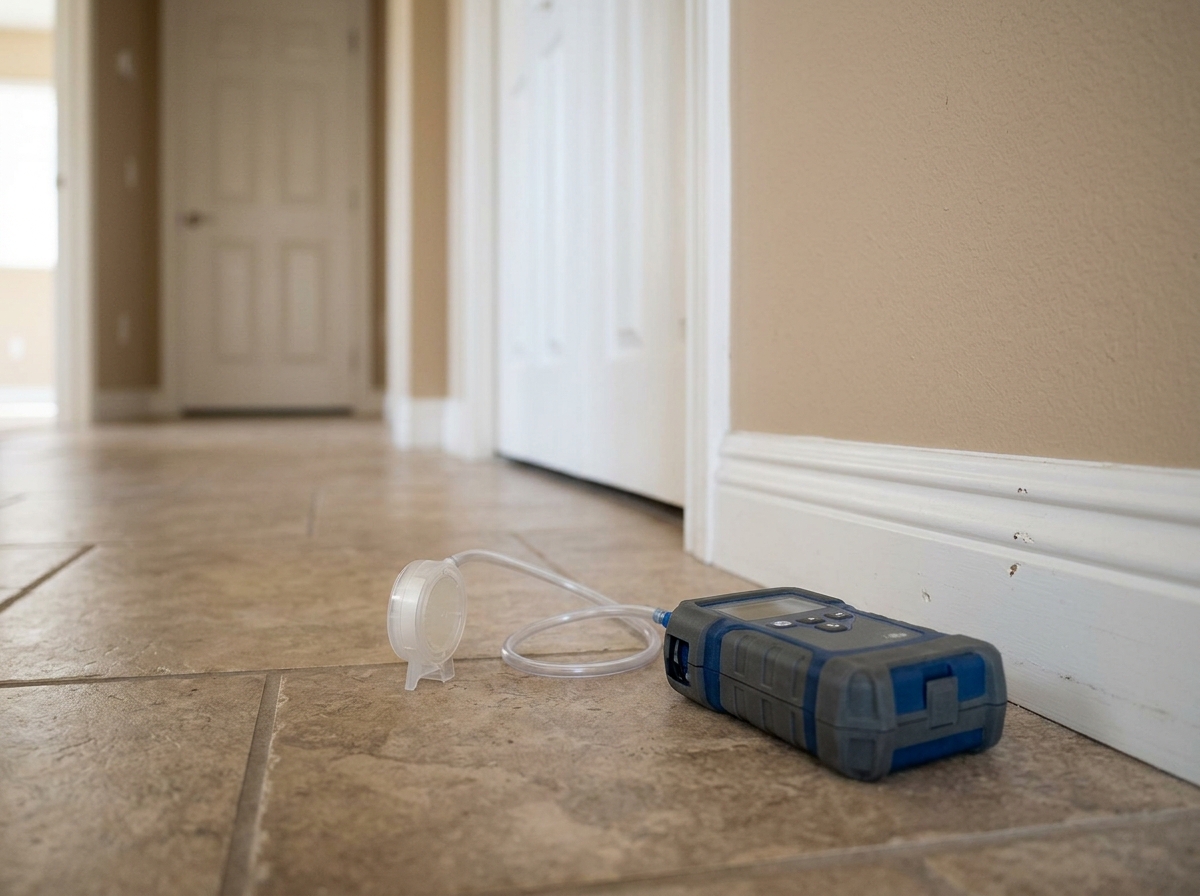
- Collect indoor samples. Air cassettes run for a set period in the rooms that matter — usually the ones with complaints, plus a representative room for comparison. Surface swabs or tape lifts can be added where visible growth is suspected.
- Optional: thermal imaging. Infrared can show cool spots that suggest hidden moisture behind drywall or under flooring — a useful pointer for where to sample.
- Lab analysis. Samples go to an accredited lab, and you get a report with counts and types.
One honest caveat: air testing is a snapshot in time. It tells you what was in the air that day, under those conditions. It is not a guarantee that no mold exists anywhere in the home, and it does not identify the source on its own.
Where Moisture Hides in Temecula-Area Homes
After enough inspections across Riverside, San Bernardino, and Orange County, patterns show up. The usual suspects:
- Attic ventilation problems. Poorly balanced intake and exhaust vents let warm moist air sit against roof sheathing. In older homes, that shows up as dark staining on the underside of the roof deck.
- HVAC condensate lines. A slow drip in a closet or attic pan feeds mold for months before anyone notices.
- Bathroom exhaust fans venting into the attic instead of outside — common in homes built or remodeled decades ago.
- Slab and stucco issues. Cracks and poor grading let water wick into wall cavities after a heavy rain.
- Laundry and water heater closets. Supply lines, pans, and slow valve drips.
- Crawlspaces. In parts of the Inland Empire with raised foundations, ground moisture and missing vapor barriers create a steady humid environment under the house.
This is also where CrawlBot foundation inspection and sewer camera scoping come in. A crawlspace with standing moisture or a cracked drain line under the slab are both moisture problems — and moisture problems are mold problems waiting to happen.
What the Results Mean (and What They Don't)
A lab report is data, not a verdict. A few things worth knowing:
- Some mold is normal. Outdoor air carries spores. Indoor air usually does too. The question is whether indoor levels and types look out of step with the outdoor baseline.
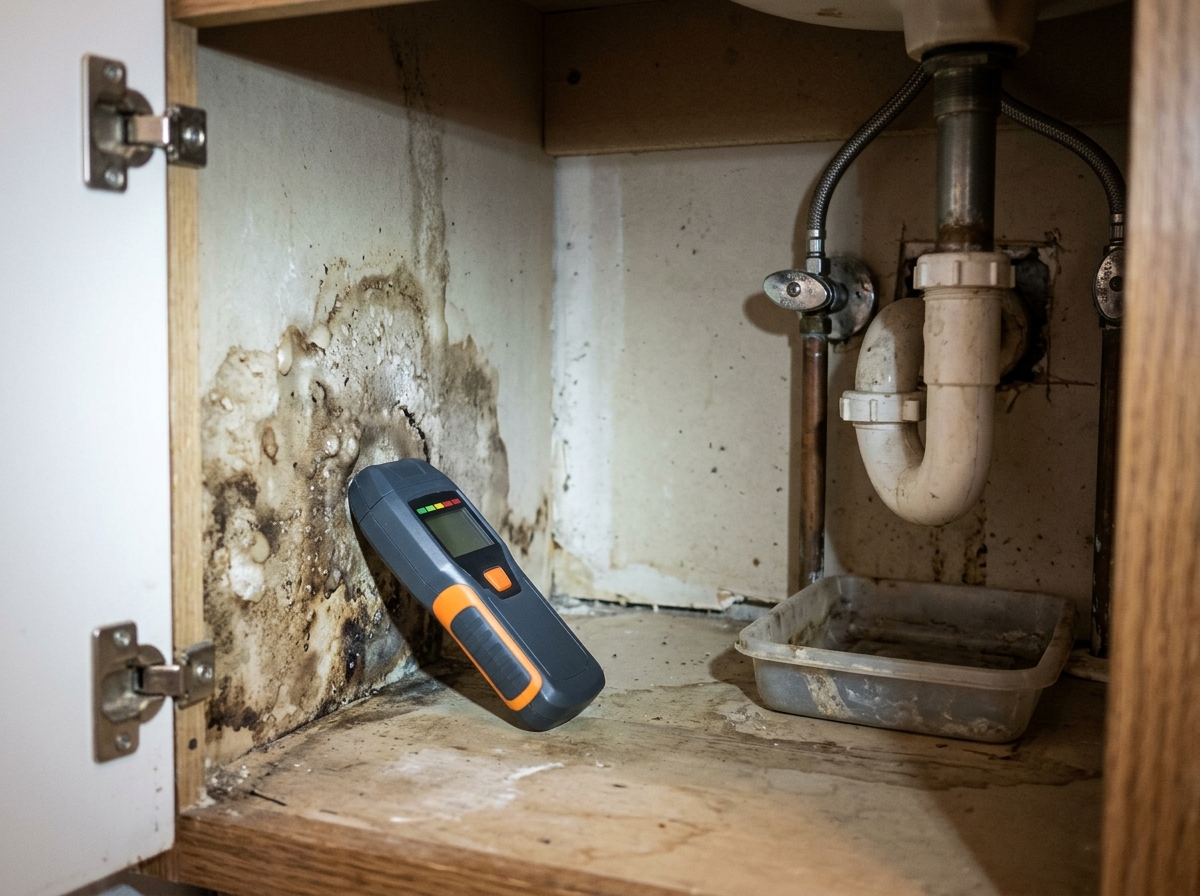
- A number alone doesn't tell you where the mold is. It tells you there's a signal. Finding the source takes inspection — moisture meters, thermal imaging, and looking in the places people don't go.
- "Black mold" is a media term, not a lab result. Labs report genus and species. Interpreting health implications is not an inspector's job.
If you have health concerns — allergies, asthma, or symptoms that seem tied to the house — talk to a qualified medical professional. If remediation is needed, that work should be done by a licensed mold remediation contractor, and it's reasonable to ask for clearance testing afterward.
What Marine One can do is document conditions, sample the air, and give you a clear picture of what's present so you can make decisions with real information.
When It Makes Sense to Test
Testing isn't necessary for every home. It makes the most sense when:
- You smell something musty and can't find the source
- There's been a water event — a leak, a flood, an overflowing toilet, a roof leak
- You're buying a home with a history of moisture repairs or a damp crawlspace
- A family member has allergies or respiratory sensitivity
- You're a seller who wants documentation that a past issue was handled
- You've had remediation done and want to verify conditions afterward
For buyers in Temecula and the surrounding areas, mold and particle testing pairs naturally with a standard residential inspection — and with radon testing, pool and spa inspection, or a drone roof inspection when the roof is steep or hard to access. Sellers inspections and warranty inspections are good times to check air quality too, especially before a home goes on the market.
If you're in Anaheim, San Diego, or anywhere across the Inland Empire and you're not sure whether testing is worth it, just ask. A short conversation usually makes the answer obvious.
Have Questions About the Air in Your Home?
If something in your house smells off, or you've had water where it shouldn't be, you don't have to guess. Marine One Property Inspections serves Temecula, Riverside, San Bernardino, San Diego, Orange County, Anaheim, and the surrounding Inland Empire communities — and Orlando Martinez is happy to talk through whether mold and particle testing fits your situation.
No pressure, no scare tactics. Just a straight answer about what testing can and can't tell you, and a clear next step if you want one.
Reach out to schedule an inspection or ask a question. If you'd rather start with a phone call, that works too.