
Radon Testing: A Vital Step for Temecula Homebuyers
By Orlando Martinez · August 5, 2026 · 2 min read
What Is Radon and Why Should You Care?
If you are in the process of buying a home in Temecula, Murrieta, or anywhere in the Inland Empire, you likely have a long checklist of things to inspect. However, there is one invisible danger that often goes unnoticed until it's too late: radon.
Radon is a naturally occurring, radioactive gas that you cannot see, smell, or taste. It is produced by the breakdown of uranium in soil, rock, and water. When this gas seeps up from the ground and accumulates inside a home, it becomes a serious health concern. Long-term exposure is the second leading cause of lung cancer in the United States, according to general health guidelines.
The Risks in Our Region
Many homebuyers assume that radon is only an issue in colder climates or specific geographic zones, but the reality is that radon can be found anywhere. The geology in Riverside County and San Diego County varies significantly, meaning a home in Temecula’s wine country could have different radon levels than a property in the flatlands of Orange County or the hills of San Bernardino.
Because you cannot detect radon with your senses, the only way to know if a home is safe is to test for it.
How Marine One Conducts Radon Testing
At Marine One Property Inspections, we take radon testing seriously. With over 30 years of experience as a building and electrical contractor, lead inspector Orlando Martinez understands how homes breathe and how gases can infiltrate a structure.
We are Radon Certified and use specialized equipment to measure the concentration of radon in the air. Here is what you can expect during the process:
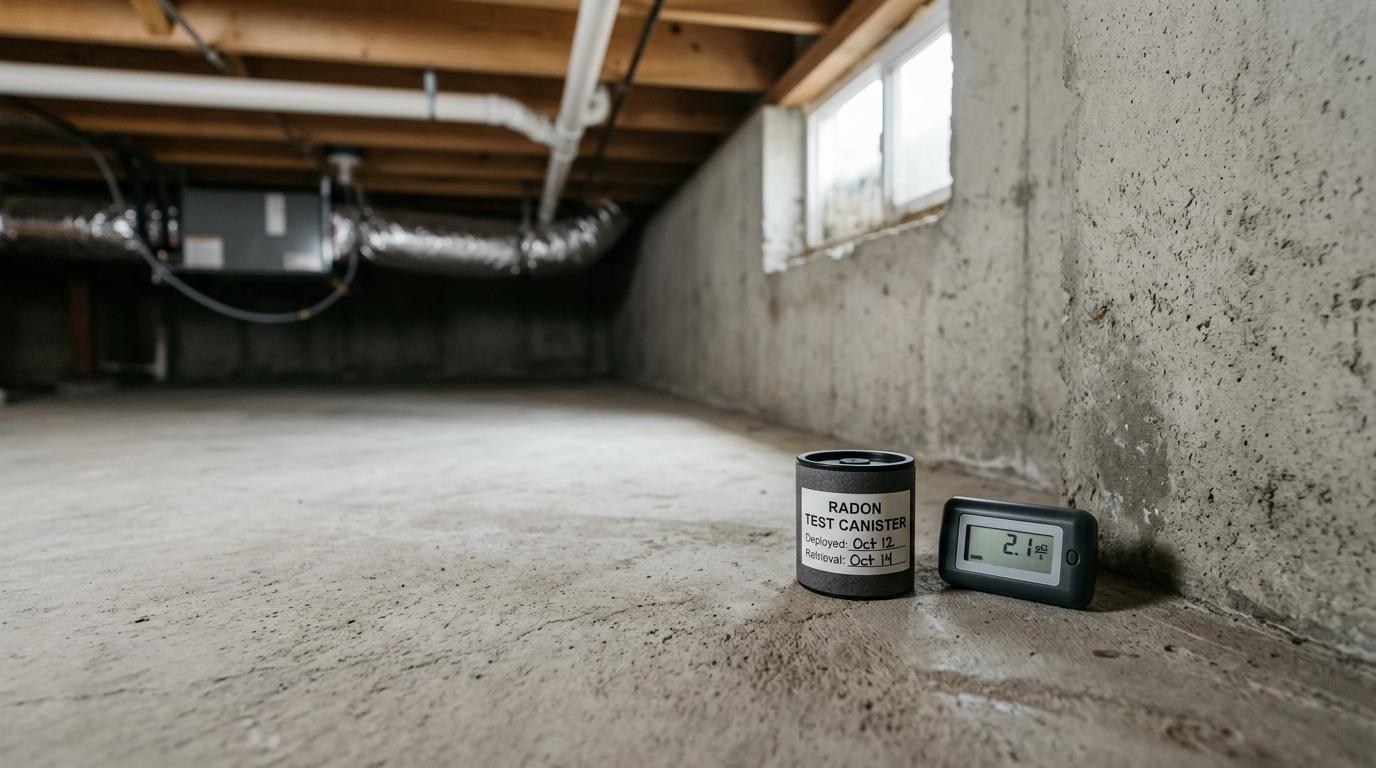
- Placement: We deploy monitoring devices in the lowest livable level of the home (often the basement or a room over a crawlspace).
- Duration: To get an accurate snapshot, the test typically needs to remain in place for a minimum of 48 hours under closed-house conditions.
- Analysis: Once the period is complete, we analyze the data to determine the average radon level in picocuries per liter (pCi/L).
Understanding Your Results
The EPA generally recommends taking action to reduce radon levels if the result is 4.0 pCi/L or higher. However, even levels below 4.0 pCi/L can pose some risk, and many homeowners choose to mitigate if levels are between 2.0 and 4.0 pCi/L for peace of mind.
If your potential new home tests high, please do not panic. Radon mitigation systems are highly effective. We recommend consulting with a licensed radon mitigation professional to install a system that vents the gas out of the home before it enters.
Protect Your Investment and Your Health
A standard home inspection is visual and focuses on the physical condition of the property, but radon testing digs deeper into the air quality. Whether you are purchasing a single-family residence in Temecula, a townhouse in Anaheim, or a commercial property in San Diego, knowing the radon levels is a critical part of making an informed decision.
Don't leave your family's health to chance. Schedule your radon test along with your residential or commercial inspection today.