
Thermal Imaging Uncovers Hidden Electrical Hazards in San Bernardino Homes
By Orlando Martinez · October 12, 2026 · 4 min read
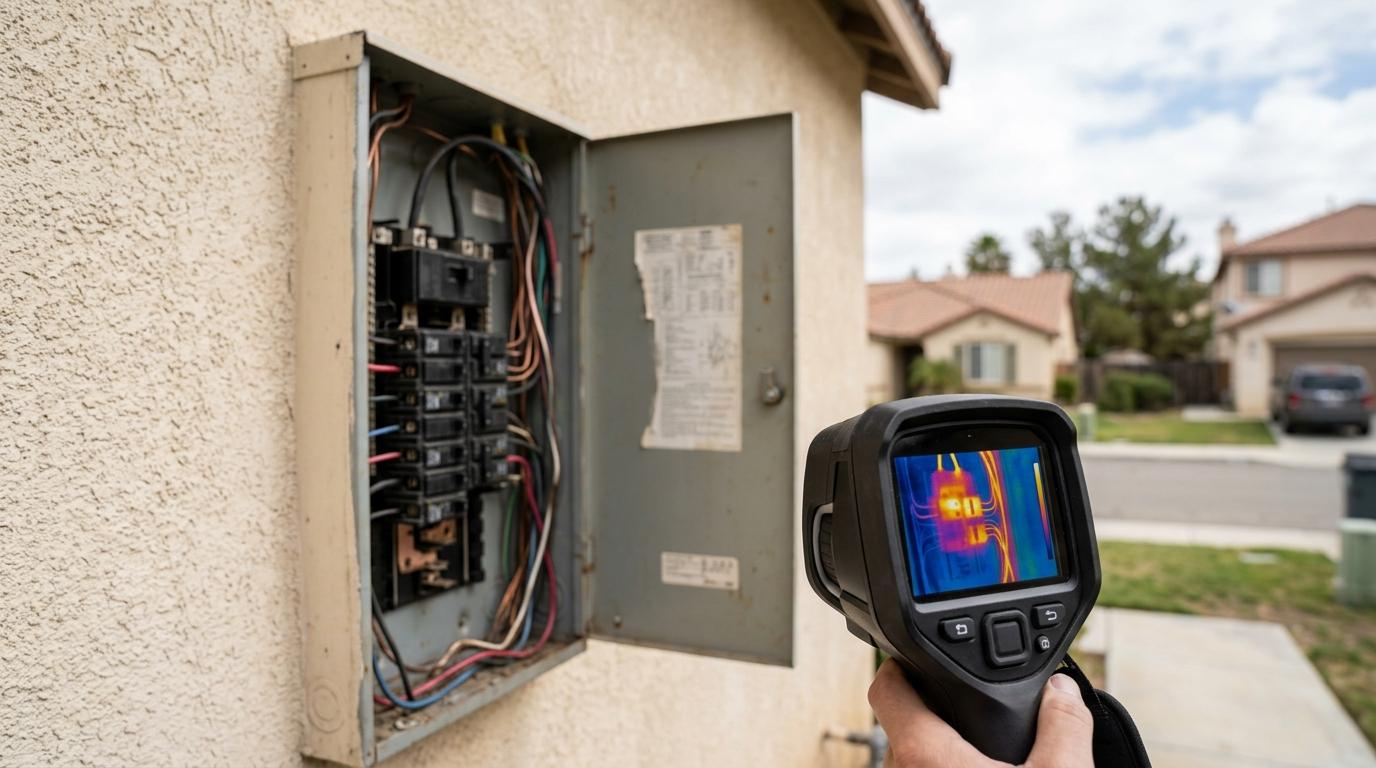
When a neighborhood fire broke out on a breezy October night in San Bernardino, the cause wasn’t a faulty furnace or a stray spark from a kitchen stove. It was an overloaded circuit hidden behind drywall, heating up until the insulation ignited. The homeowner’s insurance claim could have been avoided if a thermal‑imaging scan had flagged the hot spot during a routine inspection.
That incident is a reminder that many electrical hazards stay invisible to the naked eye—especially in the older ranch‑style homes and newer subdivisions that pepper the Inland Empire. As a longtime inspector serving Temecula, San Bernardino, and surrounding cities, I’ve seen the same hidden risks repeat, and I rely on thermal imaging to bring them to light before they become emergencies.
Why Thermal Imaging Matters in San Bernardino
The local climate and building age create a perfect storm
- Hot‑summer afternoons push roof‑mounted air‑conditioning units and attic fans to work harder, often stressing wiring that runs through attics and crawl spaces.
- Winter freezes can cause metal conduit to contract, loosening connections that later overheat when the system re‑heats.
- Housing diversity – from 1970s split‑level homes to 2000s new‑construction – means a wide range of wiring standards and sometimes outdated panels.
Thermal imaging lets us see temperature differentials that indicate:
- Overloaded circuits that are hotter than surrounding wires
- Loose or corroded connections at breakers, outlets, and junction boxes
- Improperly sized or damaged conduit in attics and crawl spaces
By scanning walls, ceilings, and even the exterior of a home, we can pinpoint a “hot spot” that looks normal to the eye but is a potential fire starter.
Image description: thermal camera display showing a bright red hotspot on the interior wall of a two‑story suburban home in San Bernardino, with cooler surrounding areas in blue and green.
Common Hidden Electrical Issues We Find
What the infrared camera reveals
- Overloaded circuits – Multiple high‑draw appliances on a single branch circuit can cause the wiring to run several degrees above normal, a clear red signature on the thermal image.
- Loose connections at breaker panels – A small area of discoloration on a breaker indicates heat buildup from a poor screw or corroded terminal.
- Faulty GFCI outlets – These protective devices can fail internally, heating up while still appearing functional.
- Underground conduit heating – In the Inland Empire’s clay soils, buried conduit can overheat if water intrusion creates a short.
- Improperly installed attic wiring – Wires run near insulation or HVAC ducts can pick up excess heat, especially during summer peaks.
Image description: close‑up of a residential breaker panel showing a small, discolored area on a breaker indicating localized heat, with surrounding breakers appearing normal.
How We Use Thermal Imaging in a Full Inspection
During a residential property inspection, I integrate thermal imaging at several key stages:
- Exterior scan – Using a drone (FAA‑Part 107 licensed) to capture roof‑line temperature patterns, which can reveal faulty solar‑panel wiring or attic ventilation issues.
- Attic and crawl‑space review – The CrawlBot foundation robot lets us access tight spaces while the camera records temperature anomalies in wiring hidden behind insulation.
- Interior walkthrough – I scan outlets, switches, and light fixtures in each room. Any hotspot triggers a deeper look, often followed by a recommendation for an electrician to evaluate the circuit.
- Report delivery – Thermal images are included in the inspection report with clear annotations, so homeowners can see exactly where the concern lies.
Thermal imaging is a supplement, not a substitute, for a qualified electrician’s assessment. It simply highlights where the electrician’s attention is most needed.
Complementary services
- Sewer Camera Scoping – Detects blockages that can cause moisture‑related electrical issues.
- Radon and Mold Testing – Ensures indoor air quality isn’t compromised by hidden moisture that can degrade wiring.
- Pool and Spa Inspections – Electrical components in pool equipment are evaluated for heat anomalies.
- Multi‑unit and commercial work – Larger properties benefit from the same infrared techniques, scaled to larger electrical panels and roof‑top equipment.
By combining these services, Marine One Property Inspections provides a holistic view of a home’s safety profile.
Next Steps – Protect Your Home Today
If you own a home in San Bernardino, Temecula, or any of the surrounding cities, a thermal‑imaging inspection can give you peace of mind before you buy, sell, or simply maintain your property.
Feel free to reach out to me, Orlando Martinez, at Marine One Property Inspections. I’m happy to answer any questions you have about the process, what the images mean, or how they fit into a comprehensive home‑inspection package. Scheduling a walkthrough is straightforward, and I’ll tailor the inspection to the specific concerns of your property—whether it’s a single‑family home, a multi‑unit building, or a commercial space.
Let’s make sure the hidden heat stays hidden where it belongs—behind safe, well‑maintained wiring. Contact us today for a no‑obligation consultation or to book your next inspection.